The architect who took his inspiration from nature
Sagrada Familia
NATIVITY


 La dirección de esta página ha sido copiada en su portapapeles
Fachada del Nacimiento
When Antoni Gaudí (1852–1926) took charge of the fledgling construction of the Sagrada Família in 1883, he set out to build the tallest church in Christendom. A link between earth and heaven that echoes the verticality of medieval cathedrals.
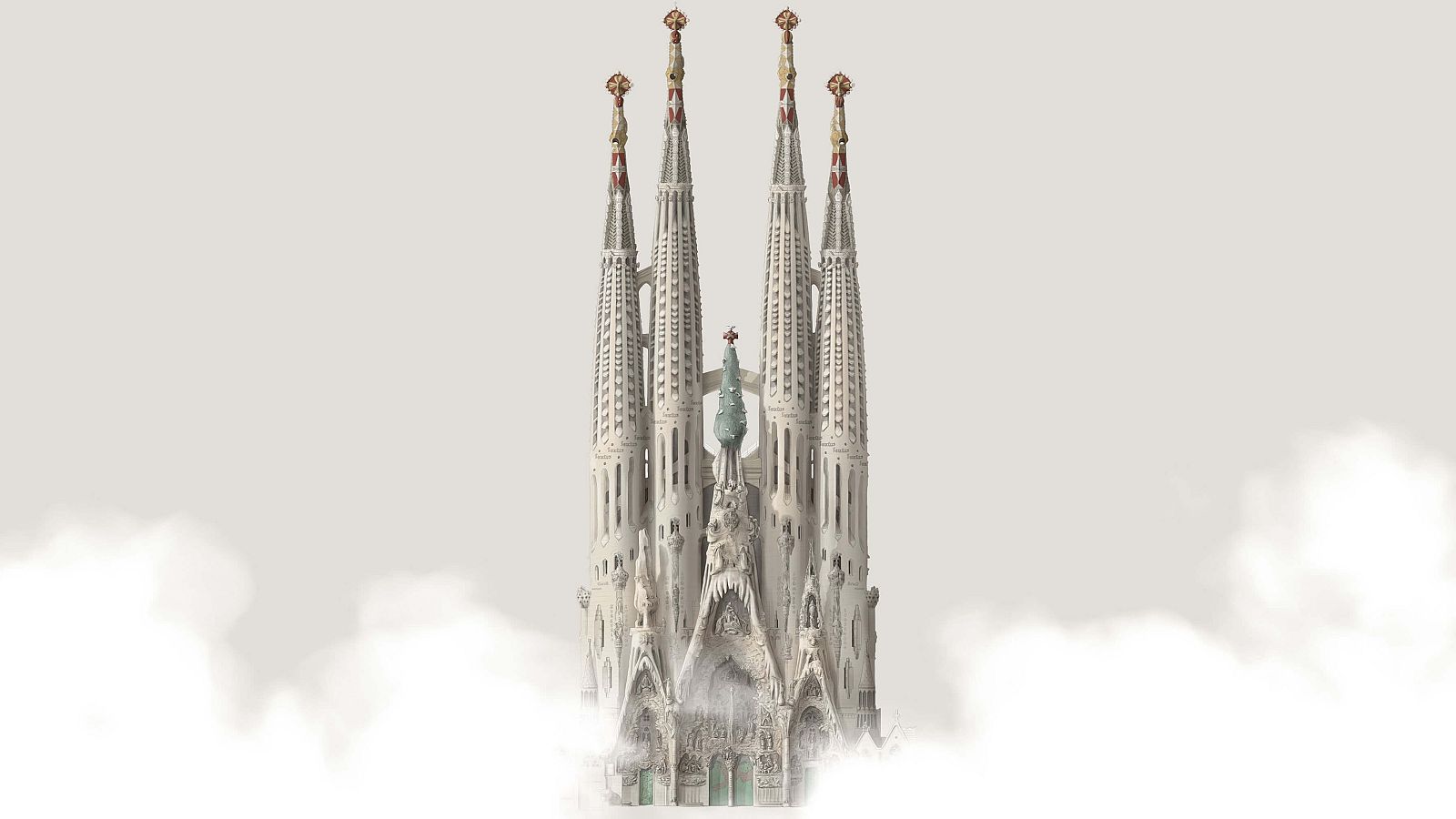
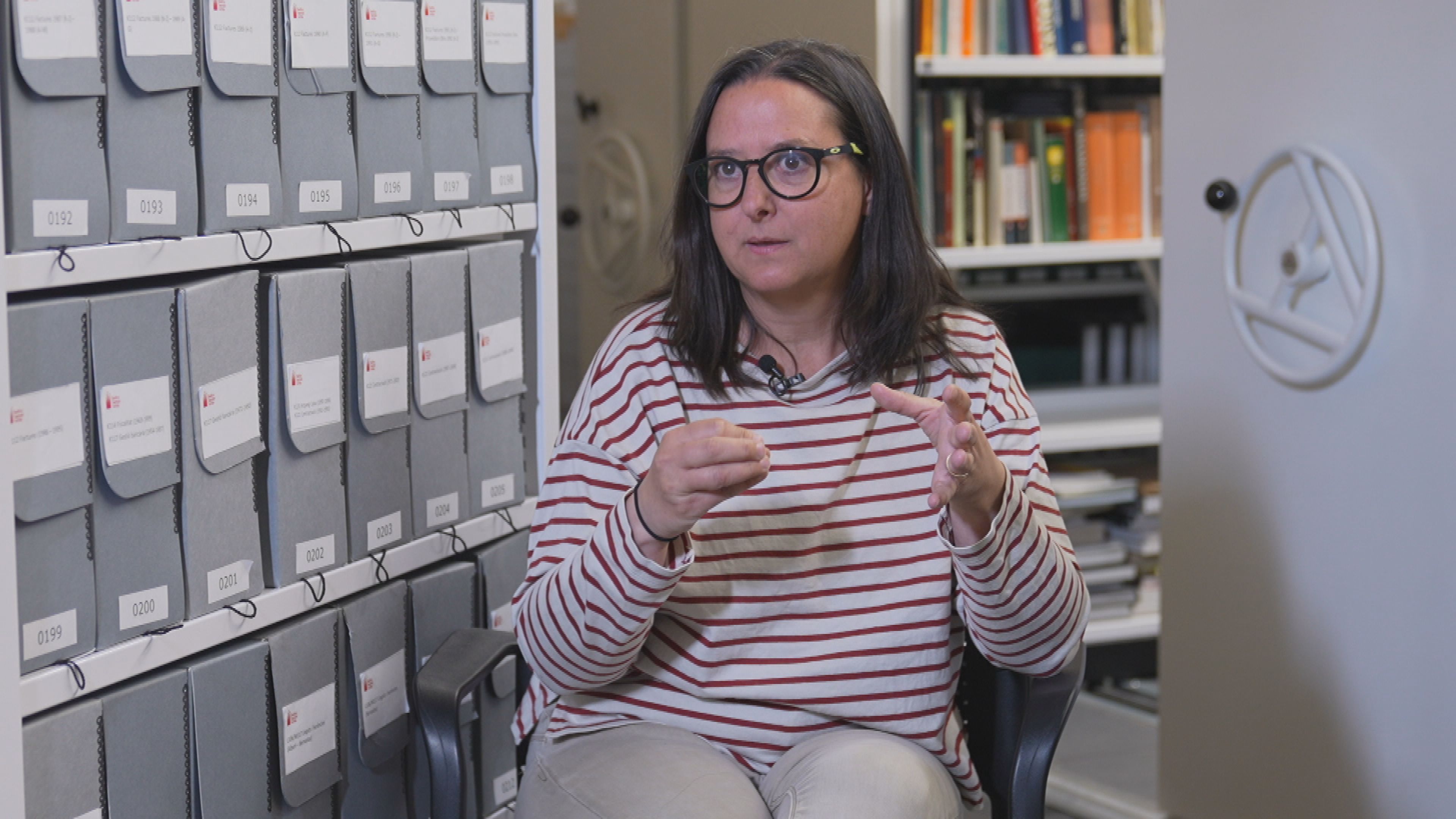
The project was already underway, so before he could start building the walls, the Catalan architect had to decide what to do with what had already been built. He made changes right from the start, but “the most important thing about Gaudí’s work on the Sagrada Família is that he was designing for the future,” explains art historian Mireia Freixa. Aware that he would not live to see his work completed, the architect opted for a pragmatic approach: he focused his efforts on completing the Nativity façade, the first of the three main entrances to the basilica; it would serve as a guide for his successors in charge of the project.
Fuente:
A life-size nativity scene
The construction of the Sagrada Família was a constant presence in Gaudí’s life. The Nativity façade focuses on depicting the early years of Jesus’ life: from the Annunciation to his encounter with the teachers in the temple. Each scene is illustrated with sculptures by Jaume Busquets, Joaquim Ros i Bofarull and Llorenç Matamala. Gaudí chose local residents living near the building site, and even some of his colleagues, as models for this life-size nativity scene.
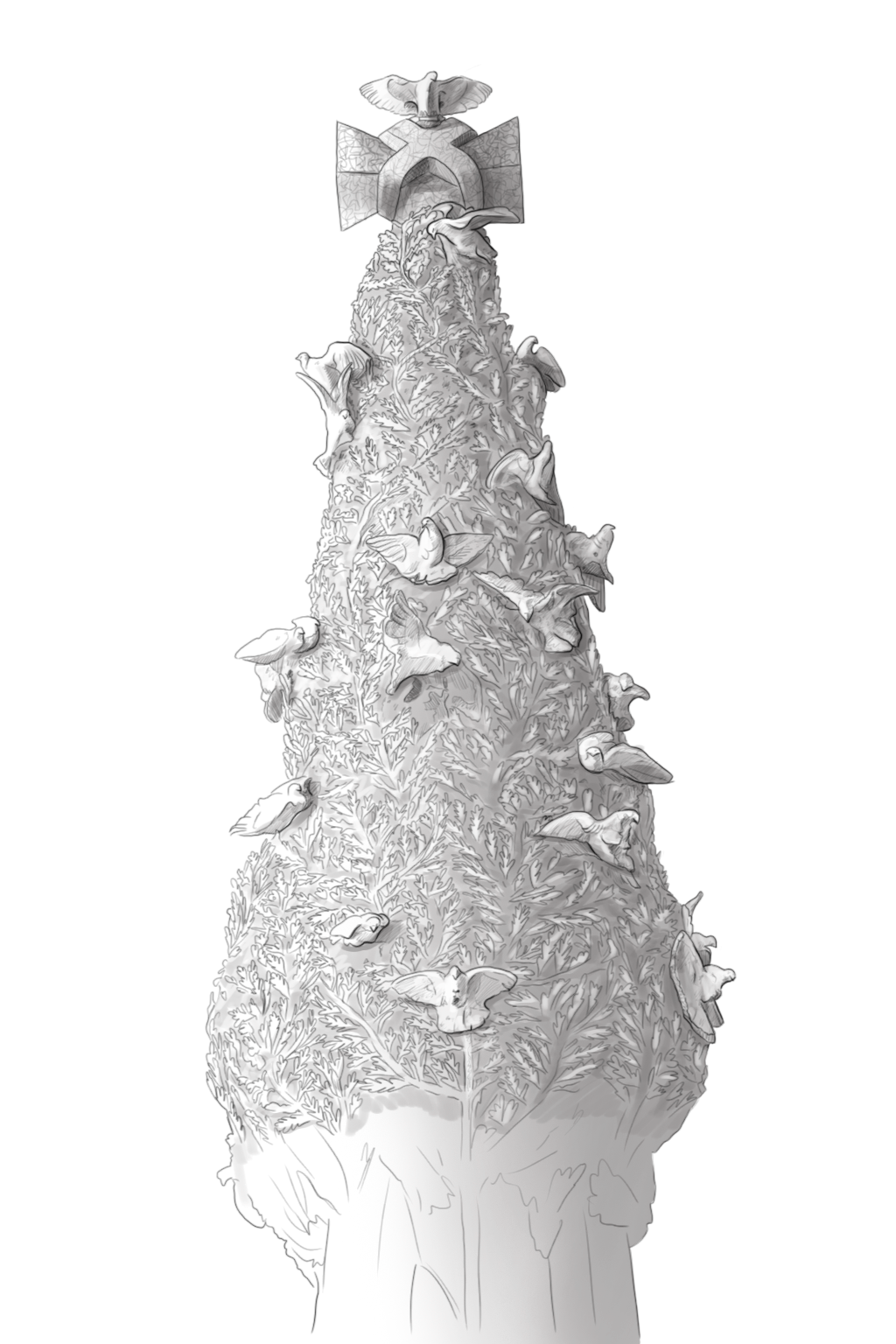
As well as being a “catechism in stone”, the Nativity façade is adorned with animals and plant motifs. Birds, reptiles, snails, fruit, flowers, ears of wheat or vines that serve to celebrate the divine creation of all living things.
Work on the Nativity façade took 41 years. At one point, 112 people were working on it at the same time. And although it was completed in 1936, ten years after the death of Gaudí —who died from his injuries after being hit by a tram—the architect succeeded in his aim of leaving a powerful legacy for future architects.
From the crypt up to the nave and aisles: reinventing the Gothic style
Gaudí was not yet 31 when he took charge of the construction of the Sagrada Família. He took over the neo-Gothic project from Francisco de Paula del Villar, who stepped down following a dispute over the materials used for the crypt’s columns, according to the biography of the architect written by Gijs Van Hensbergen. His appointment was endorsed by his mentor, Joan Martorell, partly because he had been a student of the man he was to replace, and partly because, despite his youth, he already had a strong track record in religious architecture.
The first challenge he faced was, in fact, to finish the crypt. The neo-Gothic style of the original design is clearly evident in this building, which is now used as a parish church in the Barcelona neighbourhood where the Sagrada Família is located. Gaudí retained the original style, but made significant changes.
The crypt of the Sagrada Família supports the entire weight of the basilica through a system of 22 ribbed vaults. The largest one is the one covering the centre of the crypt. It is an ingenious solution, rising two metres above the roofs of the chapels and supported by 12 radial ribs to create additional windows at the top of the arches.
Fuente:
A structure that “embraces” gravity
Gaudí set out to reinvent the Gothic style, an architectural style that allowed medieval cathedrals to rise higher and pierce their walls to flood the interior with light. However, whereas traditional Gothic architecture uses an external structure to support the basilica, Gaudí devised a solution that brings the supports back inside. After years of research, he designed the tree-like columns two years before his death.
Fuente:
In the words of the Hispanist Gijs Van Hensbergen, Gaudí, a descendant of a family of coppersmiths from Tarragona, learnt to understand space through the process of transforming sheets of copper into cauldrons. He was, therefore, an architect “schooled in the language of craftsmanship”. He viewed his projects as a continuous evolution based on a general concept, which explains why he continued to refine the design of the Sagrada Família over four decades as he built it.
“The towers on the Nativity façade have the profile of a catenary curve, which allows the weight of the tower to be transferred directly to the foundations,” explains the architect in charge of the Sagrada Família, Jordi Faulí. This solution made it possible to erect them without anything around them.
For Van Hensbergen, the catenary arch draws inspiration from the oval arches of the fortifications in Spanish Morocco, which Gaudí came to know through photography—a technique that was relatively new at the time and gave architects of his generation access to the most significant works of world architecture. “The arch is both the supporting and the supported element; and if you build a structure based on all this, you can end up creating something truly unique and brilliant,” adds art historian Mireia Freixa.
To calculate other shapes, such as the arches supporting the naves, he used the funicular model: a method of measuring structural loads using a string model. By photographing it and flipping the image, Gaudí arrived at the ideal structure. This method anticipated modern structural engineering by treating gravity as a design tool, and made it possible to increase the dimensions of the main nave, both in width—with the central nave measuring 15 metres—and in height, with the highest vault reaching 45 metres.
The vaults of the Sagrada Família represent the culmination of Gaudí’s artistic evolution, forming a light interior structure permeable to light based on hyperboloids. “Gaudí wanted a very bright nave and sought a structure that would allow for large windows to let in plenty of light,” explains Faulí. This led to extensive research, which concluded that the columns should be used as “structural trees”.
Fuente:
A forest of leaning columns
The columns in the naves of Christian churches had already been likened to a forest since the Middle Ages, but Gaudí sought to achieve a complete mimicry of nature. “In the case of the nave, these columns symbolise trees,” explains Galdric Santana, director of the Gaudí Chair at the Polytechnic University of Catalonia. The interior structure of the Sagrada Família is supported by 56 columns that lean as they rise. A forest-inspired design in which Santana sees Gaudí’s attempt to understand the laws of nature in order to apply them and “create a new nature”. Gaudí maintained that “man does not create”, but rather “discovers”, and uses that discovery “to create new works”.
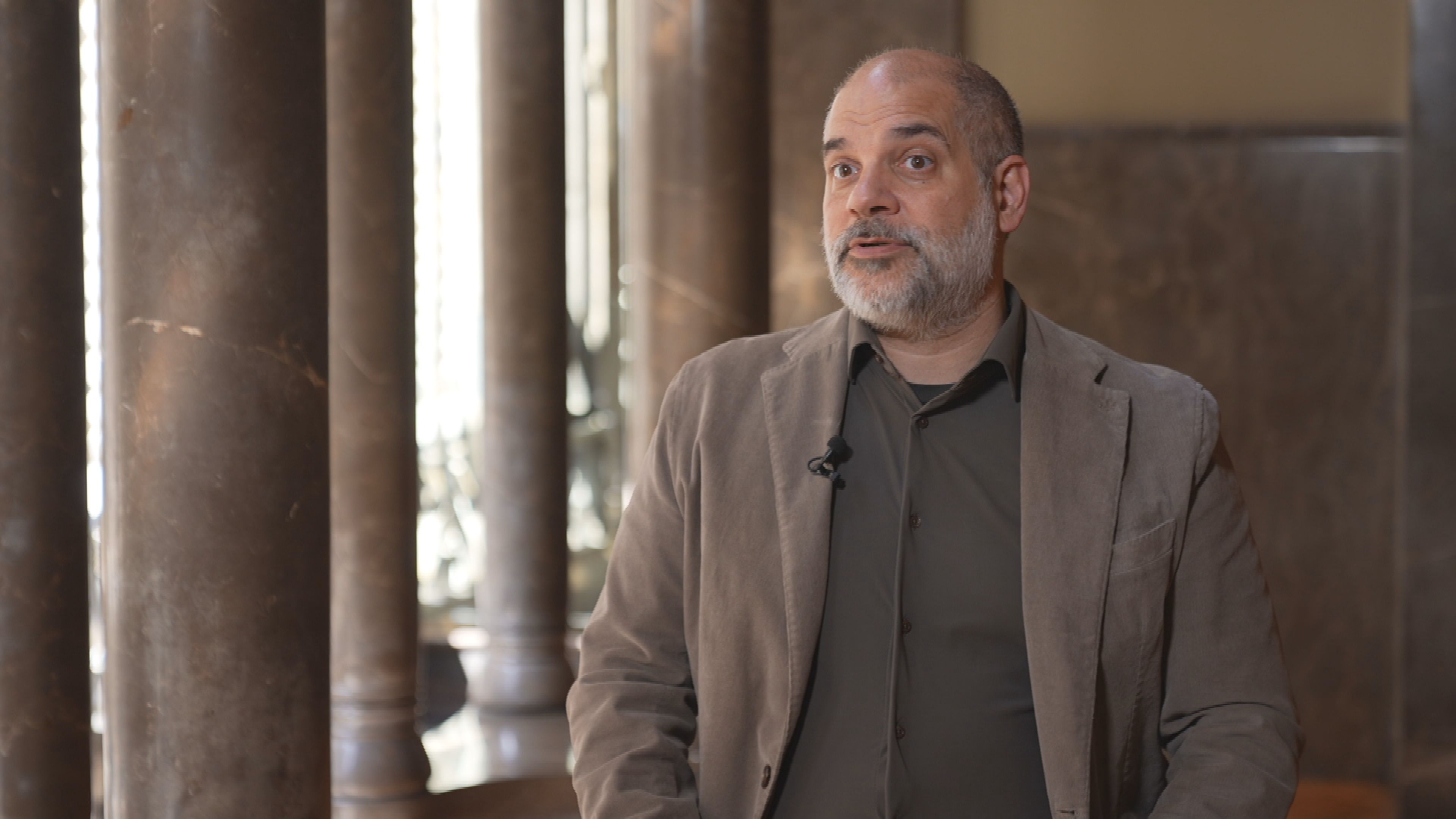
To optimise the strength of the columns, Gaudí chose different materials depending on the function of each pillar. The lighter columns are made of stone from the nearby Montjuïc quarry, whilst those in the transept—which bear the heaviest load—are made of porphyry, an extremely hard igneous rock. Granite and basalt were also used.
Apse dedicated to the Virgin Mary
Directly above the crypt, the apse was the first part of the basilica to be visible from street level, and work on its façade began whilst Gaudí was still alive. It is a traditional structure that the Catalan architect described as the “perfection of the Gothic style”, with pinnacles rising up to 50 metres above the ground.
The apse of the Sagrada Família is an upwards extension of the crypt. The architect emphasised the edges to accentuate the interplay of light and shadow created by the shadows, and also created nine small apses separated by buttresses, within which he placed seven chapels and two stairwells.
Fuente:
In keeping with the widespread Marian devotion prevalent in Europe in the late 19th century, Gaudí decided to dedicate the entire apse to the Virgin Mary. However, the chapels at the east end of the basilica are dedicated to the Seven Sorrows and Joys of Saint Joseph.
The Sagrada Família in other works by Gaudí
In the Sagrada Família, Gaudí brought together decades of observing nature. He was convinced that the basilica should not look like a building, but rather like a living organism. His inspiration from mountains or tree trunks was not based on copying their forms, as other Modernist artists had already done. Gaudí analysed how these elements functioned in order to derive structural and formal principles that he applied throughout his work.
Antoni Gaudí was a pioneer in adapting the abstract concepts of ruled surfaces—which were studied in descriptive and analytical geometry—for architectural and structural applications. Thus, his architecture seems to grow rather than be built. This collection encapsulates a distinctive architectural, artistic and symbolic style, which he experimented with on a smaller scale in the commissions he undertook alongside the Sagrada Família.
From the eclecticism and exoticism of his early works through to his mature period, Gaudí’s work traces a path that spans the Neo-Mudejar style and Modernism, which came to dominate the tastes of the industrialists based in Barcelona. His works often weave an allegorical or mythological narrative that frequently focuses on Catalan identity, a perspective heavily influenced by the Renaixença of the late 19th century. However, for the architect, “beauty and logic take precedence over styles”. And whilst catenary arches, leaning columns and the use of funicular models reached their zenith in the Sagrada Família, they are, in fact, the result of experiments that Gaudí had tried out elsewhere and which today also form part of his legacy.
Contenidos Relacionados
Credits
Coordination
Jaime Gutiérrez, Paula Guisado, Estefanía de Antonio
Editing
Jaime Gutiérrez, Carlos del Amor, Cristina Villanueva, Beatriz Gálvez Garcés, Isabel Ojeda
Video
Producer: Antonio Casado
Camera: Ignacio Cañizares, Estevan Bañuelos, Ramón Dorado, Pablo Echeita
Sound and lighting: Álvaro Escolar, Pablo Velázquez, Sergio Antón, José Muñoz
Editing and graphics: Rodrigo G. Morano, Óscar Ortiz, Raúl Pérez, Lucía Sánchez, Narciso de la Torre-Velver
Sonorous environment: Isabel García Leal
Graphics and layout (Hiberus)
Art director: Pedro Jiménez
Graphics: Pedro Jiménez, Víctor M. Meneses, Jorge Moreno Aranda
Layout: José Javier Ramos, Sonia San José
Developers: Nacho Díaz, Nicolás Schmidt
Lab RTVE
Coordination: César Peña
Developers (Evoluciona): Alejandro Matutano, Nacho Rodríguez, Gonzalo López, María Somoza, Alejandro Torres
Designers (Evoluciona): Joel Silva, Bárbara López, Boris Guzmán
Translation
Catalan: Carme Cifuentes
English: Traducciones Tridiom
Archive and documentation
Sonsoles Martín
Executive production
Lucía Villanueva, Lydia Alonso
Accessibility
Francisco Javier González Bartolomé, Laura Feyto Álvarez
SEO (Hiberus)
Luis Álvarez
Source
Video: construcción de la torre de Jesucristo y la cruz e imágenes de dron del interior y exterior de la basílica cedidas por la Fundació Junta Constructora del Temple Expiatori de la Sagrada Família.
Photo:
EFE: Andreu Dalmau, Andrés Ballesteros, Pedro Puente Hoyos, Cati Caldera, Julián Martín, Lluis Gené, Toni Garriga, Enric Fontcuberta, SVB
GettyImages: Margarethe Wichert, Aylin Mercana, Matthew Horwood
Others: Pep Daudé (Fundació Junta Constructora del Temple Expiatori de la Sagrada Família), Fondos del Centro Cartográfico y Fotográfico del Ejército del Aire y del Espacio, Ayuntamiento de Mataró, Esteban Bañuelos (RTVE)
Bibliography:
Centelles, F. (2025). Objectiu Sagrada Família. Betevé
Curti, C. (2025). Mi Gaudí: la biografía escrita por sus amigos. Triangle Books
National Geographic. (2025). Gaudí: La vida y las obras maestras del gran genio de la arquitectura. RBA Revistas
National Geographic. (2026). La Sagrada Familia toca el cielo. RBA Revistas
Rius Santamaria, C. (2012). Gaudí i la quinta potència. Publicacions i Edicions de la Universitat de Barcelona
Van Hensvergen, G. (2026). Antoni Gaudí: una biografía. Taurus
Varios. (2023). Sagrada Familia. Dosde
Varios. (2023). Gaudí, obra completa definitiva. Dosde
Thanks
Laura Bertran y Alexia Paris; Fundació Junta Constructora del Temple Expiatori de la Sagrada Família; Ana Romero, Gema Sánchez y Diego Ceberio (RTVE Noticias); Virginia Capellas (Penguin Randmhouse); Paula Pérez y Jordi Sopena (Universitat de Barcelona), Elena Hernández, subteniente José Luis García Alcolea y brigada Fernando López García (Ejército del Aire y del Espacio); NH Collection Madrid Palacio de Teapa, Sercotel Hotel Rosellón


