A “perfect” basilica and a testament to the passage of time
Sagrada Familia
PASSION



 La dirección de esta página ha sido copiada en su portapapeles
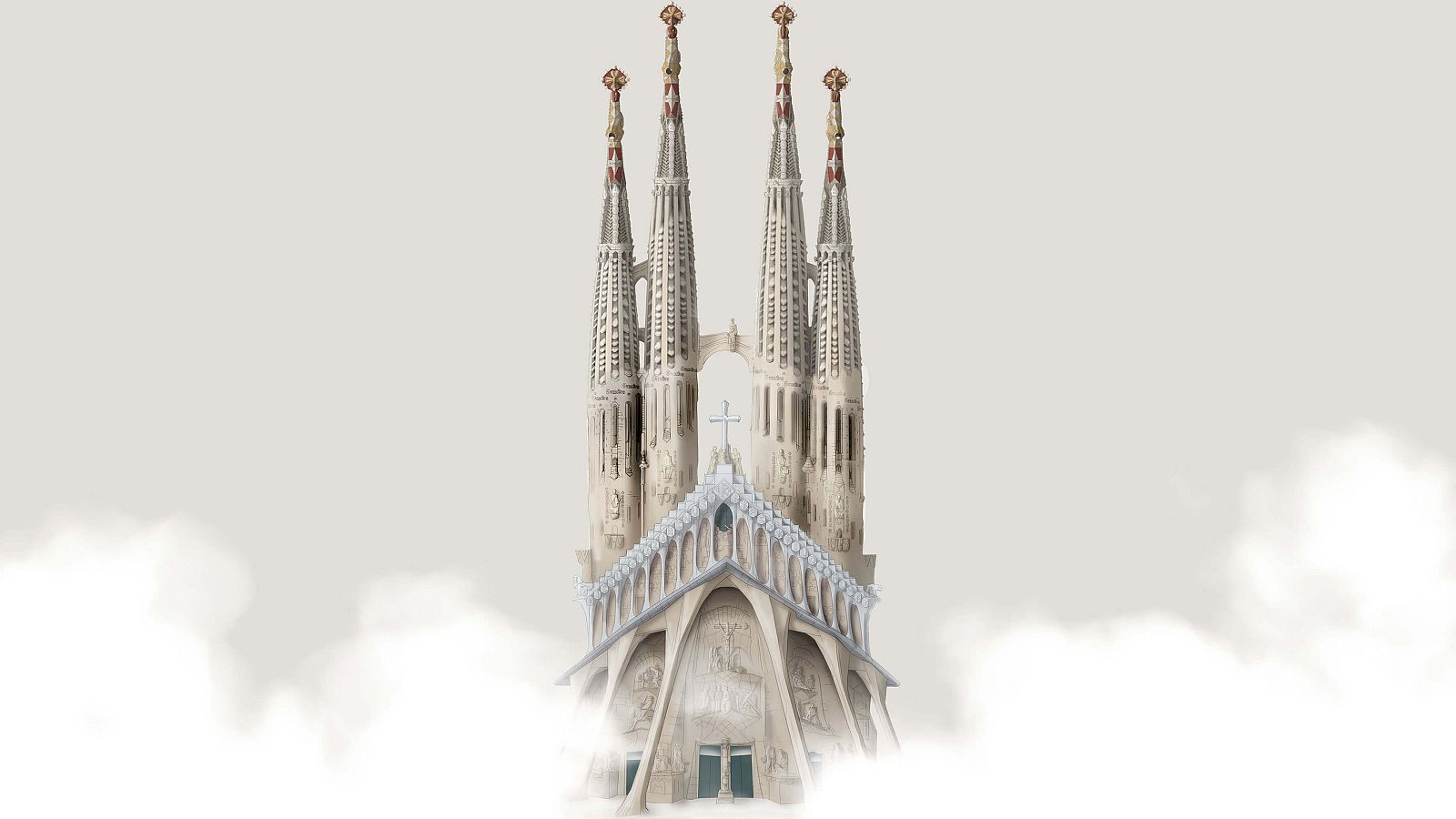
Fachada de la Pasión
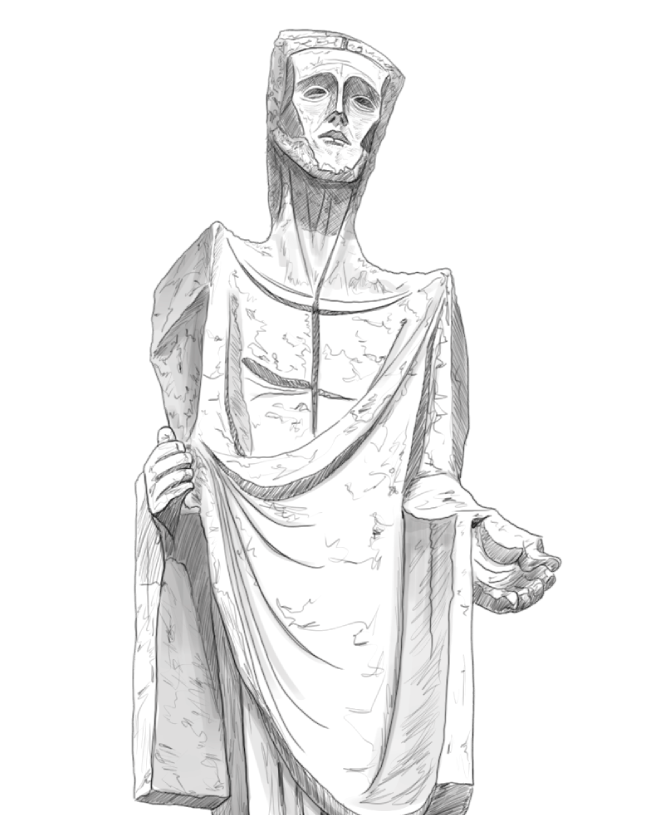
Gaudí designed the Passion Façade after having a near-death experience. In 1911, the architect retired to the town of Puigcerdà, in the Girona Pyrenees, to recover from Malta fever in a healthier environment than that of the industrialised Barcelona of the time. That is where he completed his design for the entrance to the Sagrada Família, which faces west and depicts the final days of Jesus.
The sketches made at that time were used to resume work on this façade in 1954. The structure of the portico and the bell towers was completed in 1986, and the sculptor Josep Maria Subirachs was commissioned to transform Gaudí’s drawings into a series of 12 sculptural groups, which he completed in 2005. It was designated a site of national interest in 2019.
Fuente:
The memory of a bygone era
The Sagrada Familia has been witnessing the history of Spain for 144 years. For almost a century and a half, it has at times been witness to, and at times the focus of, protests, wars, and sporting and cultural events, during a period in which Barcelona has emerged as one of the country’s leading centres of cultural, technological and economic development.
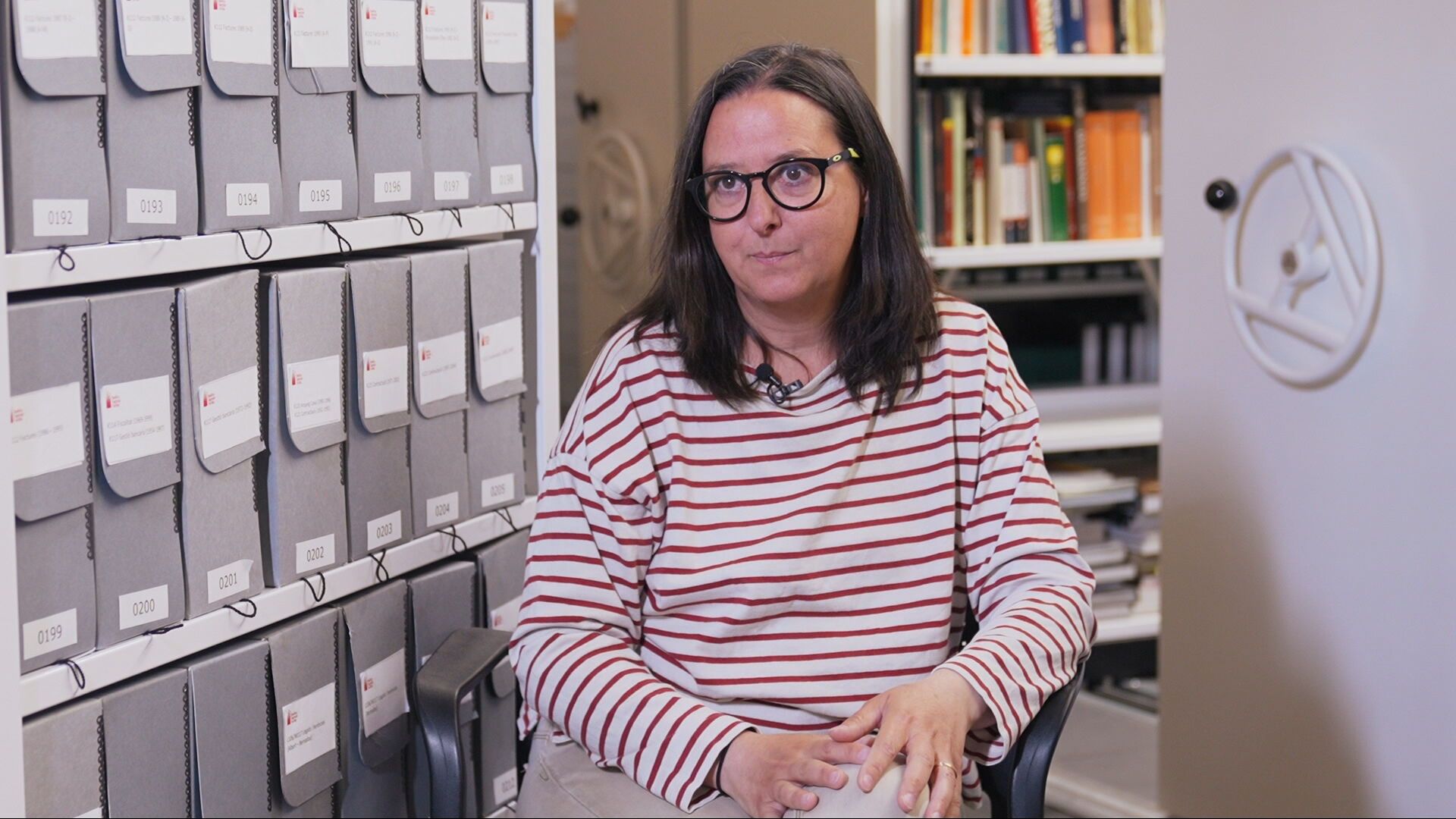
The foundation stone of the Sagrada Família was laid in a place that was not yet part of Barcelona. “There used to be farmhouses, fields and livestock here,” says Laia Vinaixa, coordinator of the Basilica’s Documentation Centre. El Poblet, now known as the Sagrada Família neighbourhood, “was a very different place from what it is today,” she explains.
It is located in the upper part of Eixample, a district that emerged in the late 19th and early 20th centuries, when Barcelona and Catalonia were in the midst of industrialisation. It was there that the bourgeoisie of the time built their grand Modernist palaces, including figures as important to Gaudí as Count Eusebi Güell, for whom he carried out several projects.
But El Poblet was originally a working-class neighbourhood that sprang up around the increasing number of factories on the outskirts of the city. And it was there that Gaudí created his “little universe”. Contemporary accounts tell us that the architect welcomed children and onlookers who visited the building site and greeted all his employees by name.
For the architect and historian Chiara Curti, this is “a detail that reveals true greatness” and stands in contrast to the prevailing industrial ethos: “Calling you by your name and involving you completely transforms the whole concept of work at that time; it means seeing you as a person and giving you responsibility, which is exactly the opposite of what used to happen in factories.”
“How is it possible that a cathedral is being built in the 21st century?”
The Sagrada Familia faced growing hostility towards public displays of faith in Barcelona following the events of the Tragic Week of 1909. The workshop and parts of the building site were attacked in the early days of the Civil War. With Gaudí’s models destroyed, construction could not continue until after the war; and it was thanks to the work of the basilica’s Documentation Centre. “The architects who worked with him began to gather all the documentation again so that they could continue with the project” and, “using the remaining pieces of the models and some photos that had been published, they set to work”, says the archive manager, Laia Vinaixa.
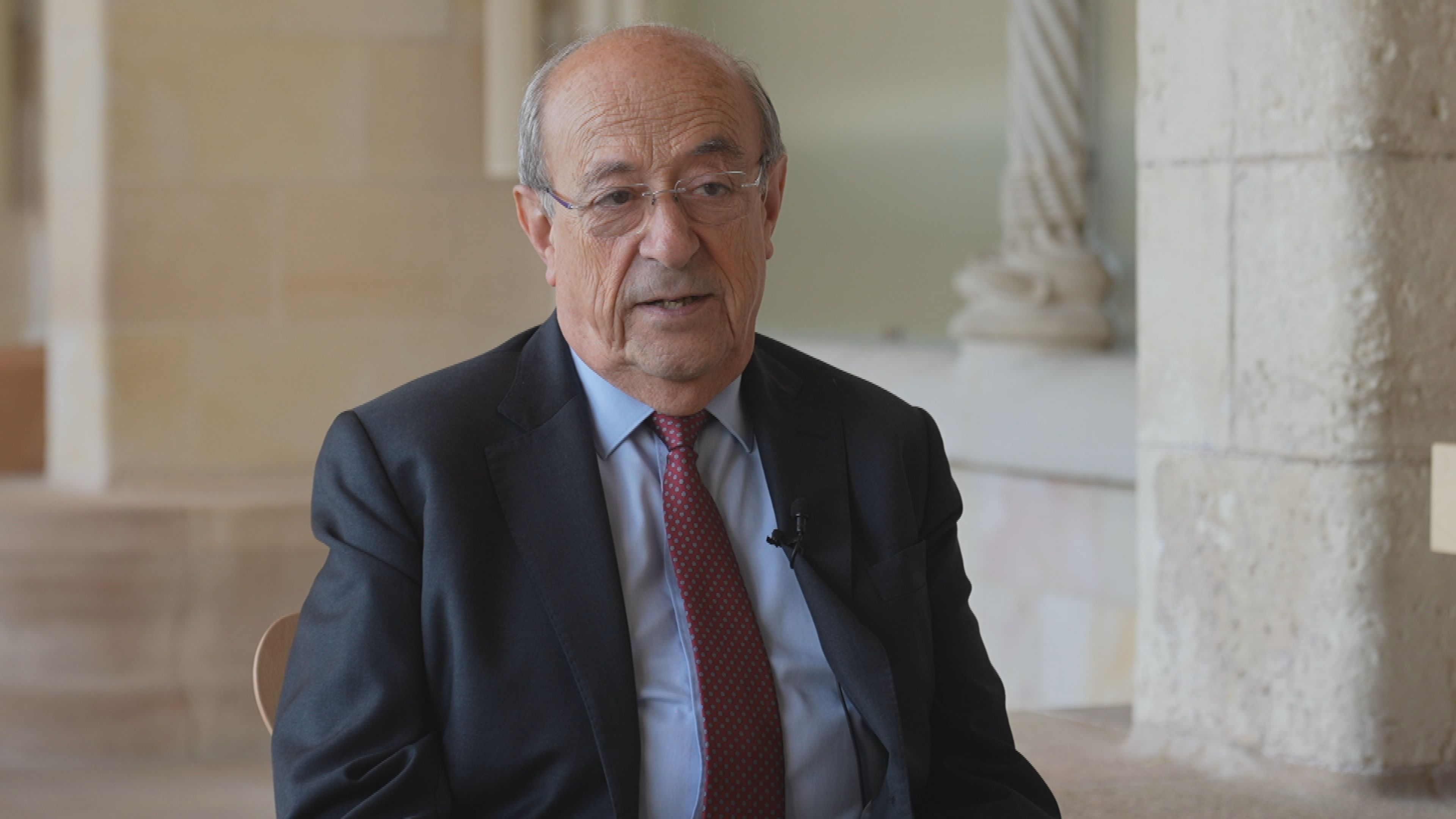
Since then, work has progressed at varying speeds, with setbacks such as that caused by the 2020 coronavirus pandemic. The deadlines have been pushed back, but the main towers have been completed in just over a decade, and Pope Leo XIV will bless the newly completed Tower of Jesus this June. "It will be a celebration for everyone," says Esteve Camps, the deputy chairman of the basilica's Construction Board.
This will be the third papal visit to the Sagrada Familia. Camps was already present at the previous ceremony, in 2010, when Benedict XVI granted the Sagrada Familia the title of minor basilica. He still vividly remembers the question the Pope asked him: “How is it possible that a cathedral is being built in the 21st century?”
Pope Leo XIV will thus be the third pontiff to visit the Sagrada Familia. And following the visits by John Paul II in 1982 and Benedict XVI, this year’s visit could mark a further step towards the goal of canonising Gaudí. The process began in the 1990s and moved forward in 2025, when Francis declared him Venerable.
The Pope is now coming to bless the tallest building in Christendom, which also fulfils Gaudí’s wish that no man-made structure should exceed the height of Montjuïc hill. “We have followed Antoni Gaudí’s wishes to the letter,” Camps says proudly.
Fuente:
- Sagrada Famìlia (Barcelona, 2026) · Modernism - 172,5 metres
- Ulm Minster (Germany, 1890) · Gothic - 161,53 metres
- Basilica of Our Lady of Peace in Yamoussoukro (Ivory Coast, 1989) · Neo-Renaissance - 158 metres
- St. Nicholas' Church (Hamburg, Germany, 1874) · Neo-Gothic - 147 metres
- Basilica of Our Lady of Licheń (Stary Lichen, Poland, 2000) · Neoclassicism - 141,5 metres
- St. Peter's Basilica (Rome, Italy, 1626) · Renaissance - 132,1 metres
- Maringá Cathedral (Brazil, 1972) · Modernism - 124 metres
- Cathedral of Saints Peter and Paul (St. Petersburg, Russia, 1733) · Baroque - 123 metres
- Riverside Church (New York, USA., 1930) · Neo-Gothic - 119,8 metres
- Basilica of the National Vow (Quito, Ecuador, 1988) · Neo-Gothic - 115 metres
- Cathedral of Santa Maria del Fiore (Florence, Italy, 1434) · Gothic - 114,5 metres
- Cathedral Basilica of Our Lady of the Rosary (Manizales, Colombia, 1939) · Neo-Gothic - 113 metres
- La Plata Cathedral (Argentina, 2000) · Neo-Gothic - 112 metres
- St. Paul's Cathedral (London, United Kingdom, 1710) · Baroque - 111 metres
- Notre-Dame Cathedral (Paris, France, 1345) · Gothic - 96 metres
Gaudí and religion
The architect Cèsar Martinell, a contemporary of Gaudí, believed that the architect of the Sagrada Família “moved from secular philanthropy to Christian charity”. However, as the historian and specialist in Spanish culture Gijs Van Hensbergen points out, a young Gaudí had already turned to the Bible for inspiration when designing a cemetery gate in one of his earliest projects as a student. Thus began a quest for the perfect Christian church, during which he acquired a solid understanding of religion that is reflected in every part of the Barcelona basilica: from the mystery of the Trinity, which underpins the building’s overall design, to the themes depicted on the façades, which encapsulate a complete theological narrative.
The Sagrada Família is designed in the shape of a pyramid pointing towards the sky, and Gaudí conceived it as a bridge between the earthly and the heavenly. “He did what Goya and El Greco had done before him: accurately depict the artistic reality of the spiritual world,” summarises Van Hensbergen. In his biography of the architect, republished to mark the centenary of his death, he describes Gaudí as a Christian who was neither “silent nor obedient”.
Gaudí chose 7.5 metres as the standard unit for the basilica’s proportions. A number lying between seven—which, in Christian tradition, is associated with the work of creation and humanity’s earthly ideal—and eight, which refers to the divine, the afterlife and Jesus in the Resurrection.
The figure 7.5 defines the basilica’s layout and height. The tower of Jesus Christ, the tallest in the basilica, stands at 172.5 metres—that is, 23 times 7.5; and the distance from the apse to the entrance is 90 metres, which, when divided by 12, again gives 7.5. This logic is echoed in the large dimensions of the interior: 45 metres in the nave, 60 metres in the transept and 75 metres in the apse.
Fuente:
Van Hensbergen describes Gaudí’s work as a form of prayer in itself. The student of the Catalan architect Domènec Sugrañes explained that he saw the Gospel “as a pharmacy” where one could stock up on “healing substances”. However, experts point out that in Gaudí’s work, aesthetics are a consequence of the structure. Form arises directly from force, with nature serving as the method of calculation. This makes him a pioneer of organic architecture, biomimetic engineering and contemporary parametric design.
The threshold of the “New Jerusalem”
Chiara Curti recounts that Gaudí chose the people in his inner circle “from the heart”, that “he had friends who were much younger than him” and that he spent a great deal of time explaining the Sagrada Familia. “You cannot love what you do not know,” the architect used to say, in a philosophy which, according to the historian, aimed to create a community of “people who loved the Sagrada Família” and who “might one day defend it”.
In a way, the cloister of the Sagrada Familia represents the threshold leading into this community. A revolutionary solution that breaks with the traditional conception of this space, which had been situated to one side of the church since the Middle Ages. Gaudí envisaged a cloister that would embrace the church, shielding it from noise and setting it back from the street to ensure the intimate, peaceful and quiet atmosphere of a monastery.
In this conception of a transitional space between the earthly world of Barcelona and the spiritual realm within the basilica, Gaudí envisaged the cloister as a place for holding processions. That is why he adorned it with roses, olive branches and palm leaves, which commemorate Jesus’ entry into Jerusalem.
Fuente:
Nature as the language of creation
Nature is a recurring theme in Gaudí’s work and also appears in the Sagrada Familia. It does so in two ways: as a structural element and as a decorative feature. In this way, he breaks with the conventions of 19th-century religious art.
Divine creation permeates the entire aesthetic of the basilica, which is conceived as a living organism. The the interior of the basilica is conceived as a forest, and the Nativity façade is adorned with animals, flowers and plants. A collection of shells, hens, birds, eagles, roses, almond trees, cherry trees, lilies and passion flowers that celebrate the birth of Christ as an explosion of life.
Gaudí transforms botany into visual theology. The finials on the towers and other decorative elements feature fruit, bunches of grapes and ears of wheat. They are natural forms, but also Christian symbols that allude to abundance, fertility and the Eucharist.
Colour, light and vaults
For Gaudí, architecture should be alive, and he used colour as an expression of that vitality. “He understood how well colour and symbol worked together, conveying their meaning beyond the realm of the rational,” says Van Hensbergen. In this sense, light is not merely a decorative element, but a theological one, and the architecture is designed to capture it, shape it and transform it into a message.
The morning sun illuminates the Nativity façade to emphasise the joy of life, whilst the evening sun is used to cast a harsh light on the figures on the Passion façade. Glory, the theme of the building’s main entrance, is associated with the midday light streaming in from above.
“I believe that the essence of the Sagrada Familia is that it gives us the chance to be amazed by reality once again,” says Chiara Curti. This play of light is particularly evident inside the church. The stained-glass windows designed by Joan Vila-Grau in the first decade of this century seek not only chromatic beauty, but an almost mystical atmosphere, transforming the interior lighting into a spiritual experience.
Fuente:
As well as through the stained-glass windows, light filters into the nave through the openings between the "crowns" of the tree-like columns, creating a luminous effect that encourages meditation and contemplation. For Gaudí, light was not only meant to illuminate a space, but also to colour it, because, as he used to say, "the sun is the greatest painter".
Contenidos Relacionados
Credits
Coordination
Jaime Gutiérrez, Paula Guisado, Estefanía de Antonio
Editing
Jaime Gutiérrez, Carlos del Amor, Cristina Villanueva, Beatriz Gálvez Garcés, Isabel Ojeda
Video
Producer: Antonio Casado
Camera: Ignacio Cañizares, Estevan Bañuelos, Ramón Dorado, Pablo Echeita
Sound and lighting: Álvaro Escolar, Pablo Velázquez, Sergio Antón, José Muñoz
Editing and graphics: Rodrigo G. Morano, Óscar Ortiz, Raúl Pérez, Narciso de la Torre-Velver
Sonorous environment: Isabel García Leal
Graphics and layout (Hiberus)
Art director: Pedro Jiménez
Graphics: Pedro Jiménez, Víctor M. Meneses, Jorge Moreno Aranda
Layout: José Javier Ramos, Sonia San José
Developers: Nacho Díaz, Nicolás Schmidt
Lab RTVE
Coordination: César Peña
Developers: Alejandro Matutano, Nacho Rodríguez, Gonzalo López, María Somoza, Alejandro Torres
Designers: Joel Silva, Bárbara López, Boris Guzmán
Translation
Catalan: Carme Cifuentes
English: Traducciones Tridiom
Archive and documentation
Sonsoles Martín
Executive production
Lucía Villanueva, Lydia Alonso
Accessibility
Francisco Javier González Bartolomé, Laura Feyto Álvarez
SEO (Hiberus)
Luis Álvarez
Source
Video: construcción de la torre de Jesucristo y la cruz e imágenes de dron del interior y exterior de la basílica cedidas por la Fundació Junta Constructora del Temple Expiatori de la Sagrada Família.
Photo:
EFE: Andreu Dalmau, Andrés Ballesteros, Pedro Puente Hoyos, Cati Caldera, Julián Martín, Lluis Gené, Toni Garriga, Enric Fontcuberta, SVB
GettyImages: Margarethe Wichert, Aylin Mercana, Matthew Horwood
Others: Pep Daudé (Fundació Junta Constructora del Temple Expiatori de la Sagrada Família), Fondos del Centro Cartográfico y Fotográfico del Ejército del Aire y del Espacio, Ayuntamiento de Mataró, Esteban Bañuelos (RTVE)
Bibliography:
Centelles, F. (2025). Objectiu Sagrada Família. Betevé
Curti, C. (2025). Mi Gaudí: la biografía escrita por sus amigos. Triangle Books
National Geographic. (2025). Gaudí: La vida y las obras maestras del gran genio de la arquitectura. RBA Revistas
National Geographic. (2026). La Sagrada Familia toca el cielo. RBA Revistas
Rius Santamaria, C. (2012). Gaudí i la quinta potència. Publicacions i Edicions de la Universitat de Barcelona
Van Hensvergen, G. (2026). Antoni Gaudí: una biografía. Taurus
Varios. (2023). Sagrada Familia. Dosde
Varios. (2023). Gaudí, obra completa definitiva. Dosde
Thanks
Laura Bertran y Alexia Paris; Fundació Junta Constructora del Temple Expiatori de la Sagrada Família; Ana Romero, Gema Sánchez y Diego Ceberio (RTVE Noticias); Virginia Capellas (Penguin Randmhouse); Paula Pérez y Jordi Sopena (Universitat de Barcelona), Elena Hernández, subteniente José Luis García Alcolea y brigada Fernando López García (Ejército del Aire y del Espacio); NH Collection Madrid Palacio de Teapa, Sercotel Hotel Rosellón


