A century-old project adapted to the 21st century
Sagrada Familia
GLORY



 La dirección de esta página ha sido copiada en su portapapeles
Fachada de la Gloria
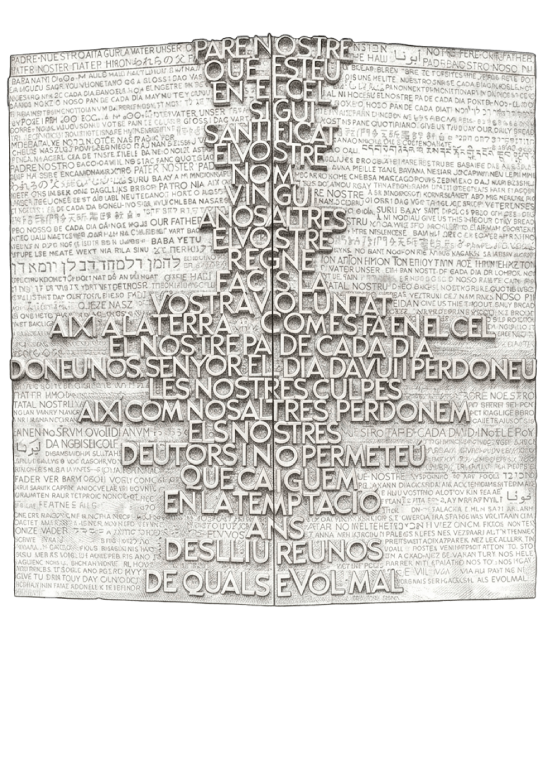
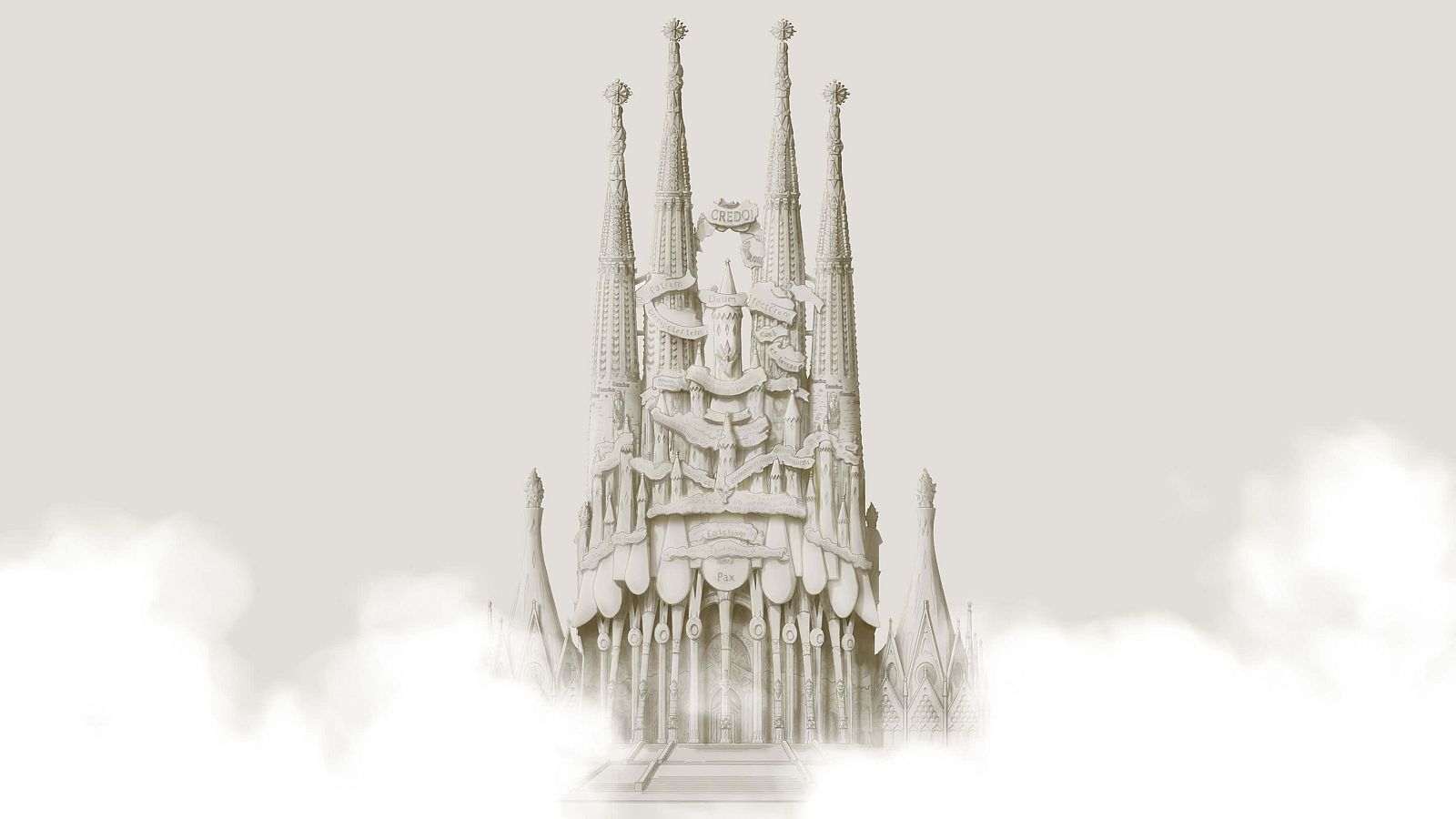
Gaudí designed the Glory Façade in 1916, ten years before his death. He commissioned a model, which was destroyed following the riots in the early days of the Civil War. Construction began 86 years later, in 2002, and has remained true to the original intention: that, before entering the basilica, visitors should become aware of humanity’s role within Creation.
“He envisaged a cluster of 16 large, hyperboloid-shaped stone lanterns rising from the sides, from a height of 20 metres up to 80 metres,” explains the chief architect of the Sagrada Familia. Jordi Faulí is the ninth person to oversee the construction of the basilica, and the seventh since Gaudí. He hopes to see the four bell towers on the Glory façade completed within the next ten years.
Later, once the more than 100 figures that will adorn the façade have been completed, what visitors will see when it is finished will be, in Faulí’s words, “a group of six lanterns illuminated by the sun that will appear to roll and rise upwards to express the desire for eternal life and eternal glory”.
The Journey of the Soul
The main façade of the Sagrada Familia will symbolise the soul’s journey towards eternal glory. Beneath the main entrance, openings will reveal hellish figures. Above them will be purgatory: a transitional space where bodies ascend towards the light. At the top, the sky with the Virgin Mary, the saints, the angels and the merciful Jesus Christ amidst large Stone lanterns
Fuente:
The day after Gaudí’s workshop was burnt down, during the early days of the Spanish Civil War of 1936, his colleagues buried the fragments of the models so that no one could destroy them any further. “When they were unearthed, they, together with the photographs, provided the equivalent of the 3D files of a modern-day studio,” explains Galdric Santana, director of the Gaudí Chair.
This has enabled Gaudí’s successors to remain faithful to the original design. Firstly, they achieved this through the involvement of some of his closest associates, such as Domènec Sugrañes and Francesc de Paula Quintana. And subsequently, through an exhaustive study of the architect’s legacy.
Over the years, technological advances have been added to this body of documentation. 3D printing and LiDAR scanners, which use laser light pulses to measure distances with great precision, have enabled construction work to be substantially accelerated in recent decades.
Six magnificent towers in 12 years
As in other parts of the basilica, Gaudí encapsulates the hierarchy of Christianity in the Sagrada Família’s system of towers: starting with the lowest towers, dedicated to the 12 apostles, the basilica rises in height through the towers of the Virgin Mary and the four evangelists, and reaches the heavens at its highest point, the tower of Jesus Christ. This pyramidal arrangement is not merely formal but symbolic, representing an ascent from the apostolic community to Christ.
Fuente:
Work on the six central towers of the Sagrada Familia began in 2014 and has proved to be one of the project’s greatest architectural challenges. They are between 135 and 172 metres tall, and it was possible to complete them in just 12 years thanks to the use of post-tensioned stone panels. In other words, prefabricated modules reinforced from the inside with steel bars.
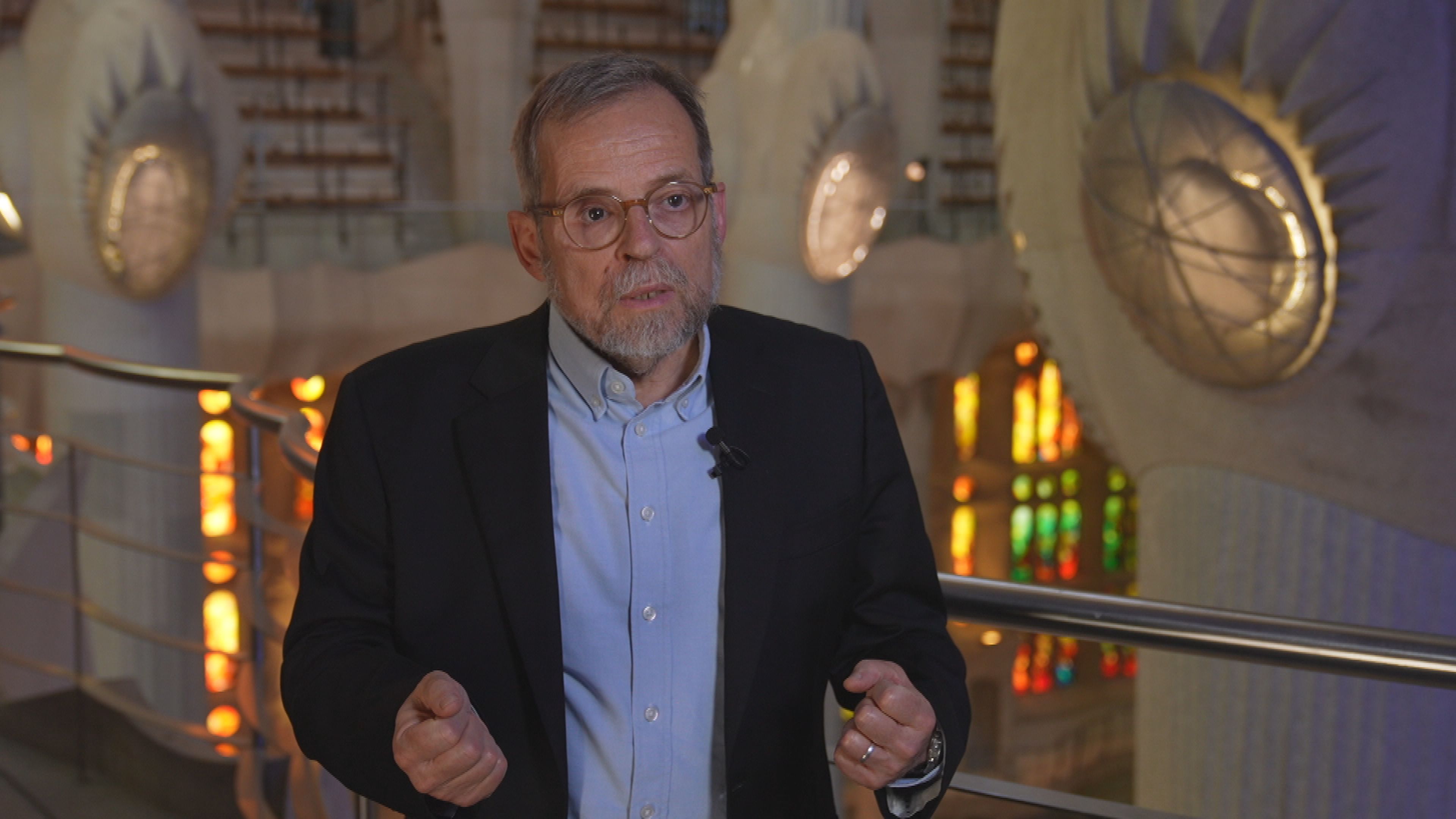
“With this system, the stone achieves greater structural strength than usual,” explains Faulí. The architect explains that this technique, similar to the modular system that Gaudí used on the façade of Casa Milà (1906–1912), has simplified the construction work whilst ensuring the building’s stability. “First we assembled the panels in an external workshop and then installed them, knowing they would fit together perfectly,” he explains.
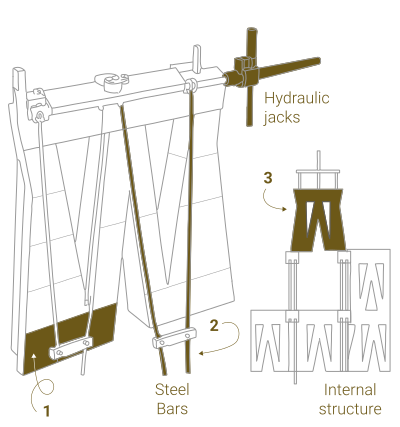
The tower elements are made of sandstone. They are cut using a high-precision digital tool and finished by hand to preserve their handcrafted texture.
The panels are assembled using stainless steel bars to form a lightweight, wind-resistant structure.
Each module is attached to the tower’s central structure. Within the central structure, there is a spiral staircase and an elevator shaft.
The Cross of Jesus
The incorporation of technological advances also draws on historical sources. “We have El Propagador de la Devoción a San José [The Promoter of Devotion to Saint Joseph],” explains Laia Vinaixa, coordinator of the Sagrada Família Documentation Centre. This is a magazine published by the basilica’s promoters, which began publication even before it was built. It explains the entire process. “It’s a very important foundation for following the project,” she insists.
Another source is the Sagrada Família Albums, a series of booklets that have been used since 1915 as multilingual guides for visitors to the site. They described, for example, what one of the latest elements to be installed would look like: the cross on the Tower of Jesus.
The notes state that the cross would be positioned above the altar, in the centre of the transept; that it would have four arms so that it would be visible from every angle; and that its shape would start as a square and gradually transform into an octagon. As for the structure, the albums mention that it would be made of gleaming glass so that the views could be admired from inside.
Those continuing Gaudí’s work ruled out making the cross completely transparent, as it would trap so much heat that it would be impossible to visit. However, to stay true to the original concept, they commissioned a company specialising in concrete and glass works based in Gundelfingen (Germany) and clad it with some 15,000 pieces of glazed ceramic. Tiles in various shades of white, produced in a workshop in Granollers (Barcelona), imitating the trencadís style of Park Güell.
Inside the Tower of Jesus Christ, visitors will be able to see another ceramic mural, 60 metres high, which is still under construction. It will tell the story of the night sky through some 50,000 pieces of glazed ceramic.
Fuente:
Trencadís at the Sagrada Família
Although stone is the predominant material at the Sagrada Família, Gaudí’s work cannot be understood without trencadís, a Catalan mosaic technique using broken ceramic or glass fragments to create decorative surfaces. “He used it for the first time on a relatively minor building: the gatehouses of the Torre Güell,” explains art historian Mireia Freixa. Gaudí was not the first to use this decorative system, but he made use of certain materials in a way that was unprecedented for the time. He created mosaics using irregular fragments of ceramic, glass or earthenware.
Like almost everything in Gaudí’s architecture, trencadís has both structural and symbolic purposes. It expresses his belief that colour is life, drawing on a logic closely tied to nature: these are irregular fragments which, when joined together, create a rich, organic and ever-changing surface that adapts perfectly to the basilica’s complex forms. It also reflects his desire to integrate the arts and crafts into a single, comprehensive work.
The trencadís fragmented tiles are particularly prominent on the tops of the bell towers, 25-metre-high spires adorned with colourful polychrome Venetian mosaics that sparkle in the sunlight. They also appear in the fruit, grapes and ears of wheat that adorn the towers. They are coated with solid Murano glass, which retains its colour throughout its thickness, making them more resistant than conventional ceramics to the harsh conditions at that height. “Gaudí wanted people arriving by sea to be able to see the spires of the Sagrada Família glistening,” explains Freixa.
Fuente:
A new architectural order
Antoni Gaudí did not merely design buildings; he also meticulously studied how the human eye would perceive his work from different angles and distances. “Gaudí believed he was creating a new Greek order for future generations, like a new classical architectural order,” explains Galdric Santana, director of the Gaudí Chair at the Polytechnic University of Catalonia, who notes that the Sagrada Familia has its own podium or colonnade. This conception of perspective for the Sagrada Família integrated urban planning, the optical correction of the sculptures and the basilica’s universal visibility.
Gaudí limited the height of the Sagrada Família to 172.5 metres so that it would stand out against the Barcelona skyline without exceeding the maximum height set by Montjuïc hill. However, beyond the height restriction, he took the surroundings of the basilica very much into account. He did not view it in isolation and fervently championed a plan for a star-shaped plaza around it, a proposal that remains a subject of debate to this day.
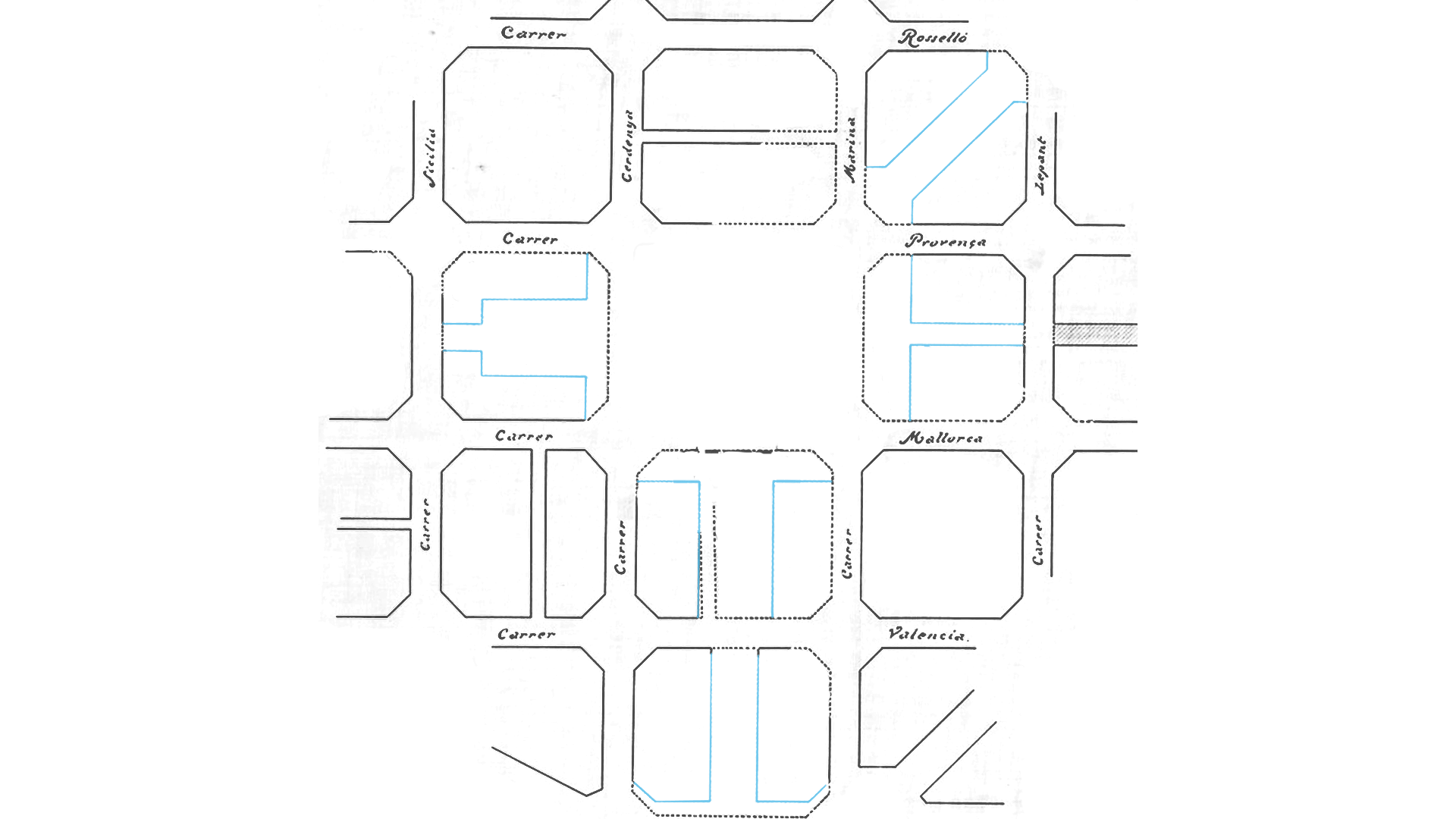
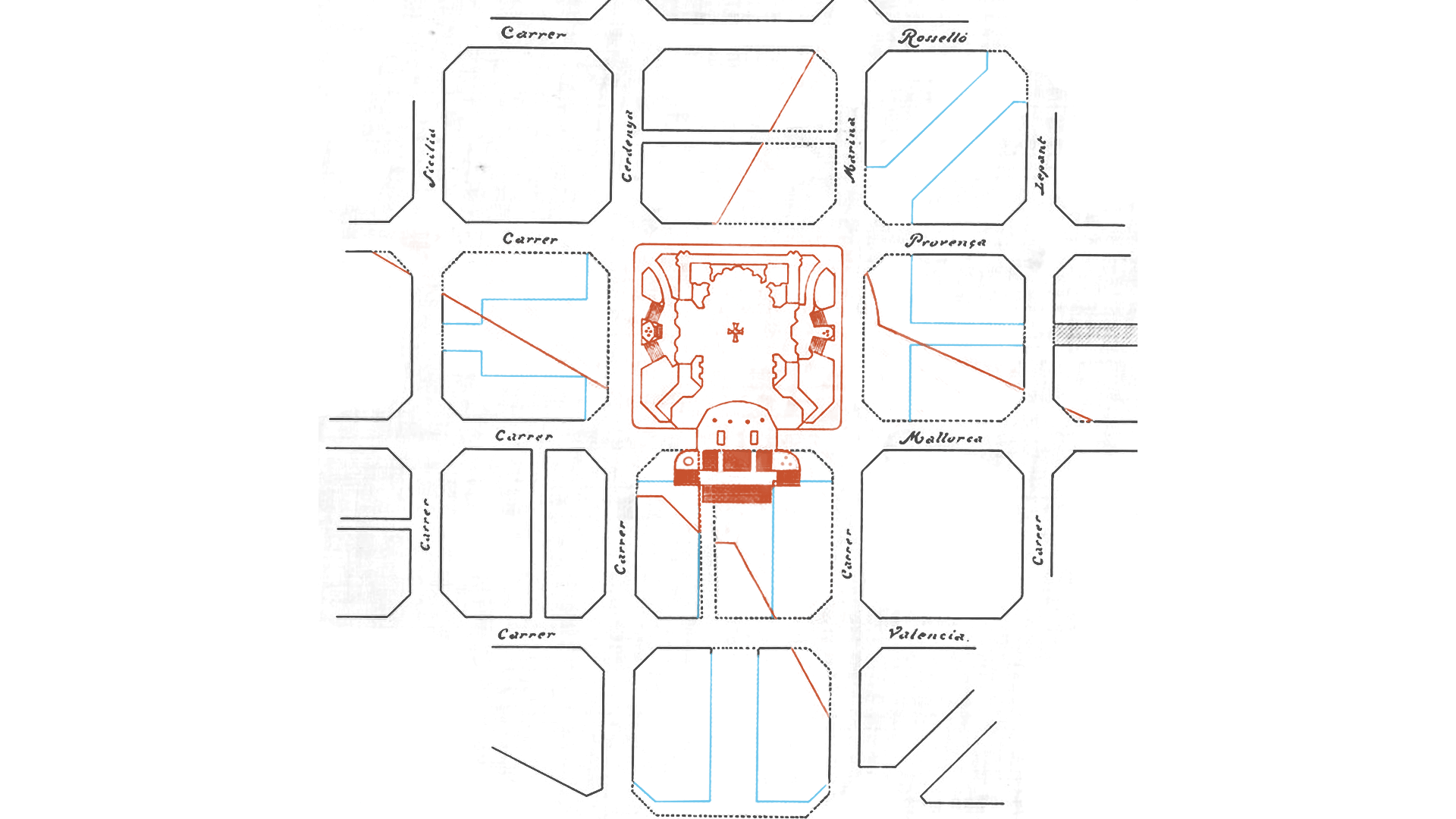
In 1916, Barcelona City Council commissioned French architect Léon Jaussely to draw up an urban plan of grand avenues for the area surrounding the Sagrada Família, inspired by the great boulevards.
He proposed a triangular promenade in front of the Glory façade reaching as far as Carrer d'Aragó. However, Gaudí considered it insufficient for the grand stairway he had envisioned.
Gaudí responded with a proposal for a star-shaped square designed to preserve the four specific viewpoints from which he wanted the temple to be visible in the future.
Since then, the stairway of the Glory façade has been the last great construction challenge of the Sagrada Família, as it extends beyond the boundaries of the current site and directly affects the residential buildings in the block opposite.
This 1934 image already shows urban growth on the block along Carrer de Mallorca, where Gaudí proposed placing his stairway.
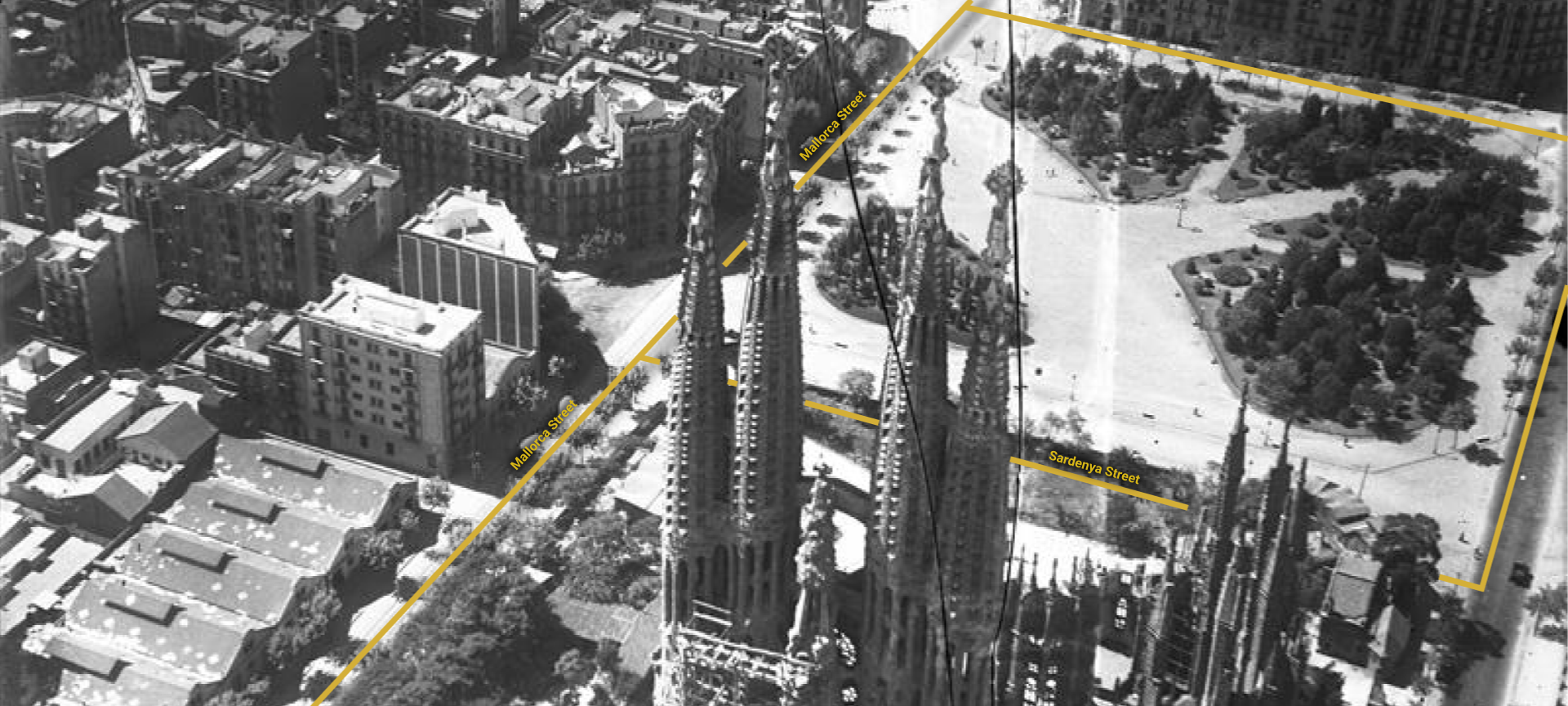
The city continued to grow around the Sagrada Família. By 1965 there were buildings on both Carrer de Mallorca and Carrer de la Marina, where there is now a park.
By 1997, the surrounding area already had the configuration it has today, with the garden of the Plaça de la Sagrada Família in front of the Passion façade.
Gaudí put forward all manner of arguments in support of his plan. Economic ones too. According to his calculations, in order to build his star-shaped plaza, around 20,500 m² less land would need to be expropriated than under the City Council’s 1917 plan, which was the one that was ultimately adopted.
Today, Gaudí’s plan is “non-negotiable” due to its historical value for the Construction Board, which is seeking solutions to build the monumental staircase. It would occupy a space where dozens of residents currently live, who are demanding the right to remain in their homes or to be offered fair solutions.
“We know what Gaudí wanted, because it’s all there in his drawings; and there’s definitely a need for dialogue, which has already begun and which we hope will bear fruit,” explains Jordi Faulí.
The deputy chairman of the Sagrada Família Construction Board Foundation estimates that the vertical construction of the Glory façade, for which a building permit has already been granted, could be completed in around ten years. Esteve Camps points out that “what is being negotiated [with Barcelona City Council] is whether the hyperboloids [of the lantern structures] in front of the four towers, and the bridge on Carrer Mallorca, can be built”. The completion of the staircase and the esplanade, which is currently awaiting approval, will mark the definitive end of the works.
Gaudí’s avant-garde legacy
By the mid-1920s, Art Nouveau and Modernism had become outdated in Europe. “Symbolic and narrative architecture had clearly fallen out of fashion by then,” explains the Spanish scholar Gijs Van Hensbergen in his biography of Gaudí. Frank Lloyd Wright’s organic architecture, which focuses on harmony between the human habitat and the natural environment, and Bauhaus architecture, which prioritises functionality over ornamentation, began to gain prominence.
This shift in international trends is reflected in Catalonia in the Noucentisme movement, a reaction against Modernism that sought order, serenity and classicism, drawing inspiration from Mediterranean tradition and the Renaissance. However, according to art historian Mireia Freixa, following Gaudí’s death in 1926, there remained a group of architects inspired by Gaudí who were deeply impressed by his persona and fascinated by his work.
“Gaudí has always been a legend in Catalan culture,” she states. Furthermore, the expert believes that the continuation of the Sagrada Familia was used as “a political message” during Primo de Rivera’s dictatorship and in the post-war period. “It was a building designed by a very religious and very Catalan architect,” she says.
“Gaudí is quite an unusual man: he is a genius, but it has taken a very long time for this to be recognised,” says Gijs Van Hensbergen, who believes it has taken 100 years for Gaudí’s work to be celebrated, for example, in his use of sustainable materials. In the same vein, Mireia Freixa highlights Gaudí’s contribution to engineering and bridge-building. “He was a ‘rationalist and functionalist before anyone else’,” adds Galdric Santana, whilst Van Hensbergen emphasises his avant-garde approach: “I believe that Norman Foster, Zaha Hadid or Santiago Calatrava could not have created the kind of buildings they did without Gaudí having paved the way.”
Contenidos Relacionados
Credits
Coordination
Jaime Gutiérrez, Paula Guisado, Estefanía de Antonio
Editing
Jaime Gutiérrez, Carlos del Amor, Cristina Villanueva, Beatriz Gálvez Garcés, Isabel Ojeda
Video
Producer: Antonio Casado
Camera: Ignacio Cañizares, Estevan Bañuelos, Ramón Dorado, Pablo Echeita
Sound and lighting: Álvaro Escolar, Pablo Velázquez, Sergio Antón, José Muñoz
Editing and graphics: Rodrigo G. Morano, Óscar Ortiz, Raúl Pérez, Lucía Sánchez, Narciso de la Torre-Velver
Sonorous environment: Isabel García Leal
Graphics and layout (Hiberus)
Art director: Pedro Jiménez
Graphics: Pedro Jiménez, Víctor M. Meneses, Jorge Moreno Aranda
Layout: José Javier Ramos, Sonia San José
Developers: Nacho Díaz, Nicolás Schmidt
Lab RTVE
Coordination: César Peña
Developers (Evoluciona): Alejandro Matutano, Nacho Rodríguez, Gonzalo López, María Somoza, Alejandro Torres
Designers (Evoluciona): Joel Silva, Bárbara López, Boris Guzmán
Translation
Catalan: Carme Cifuentes
English: Traducciones Tridiom
Archive and documentation
Sonsoles Martín
Executive production
Lucía Villanueva, Lydia Alonso
Accessibility
Francisco Javier González Bartolomé, Laura Feyto Álvarez
SEO (Hiberus)
Luis Álvarez
Source
Video: construcción de la torre de Jesucristo y la cruz e imágenes de dron del interior y exterior de la basílica cedidas por la Fundació Junta Constructora del Temple Expiatori de la Sagrada Família.
Photo:
EFE: Andreu Dalmau, Andrés Ballesteros, Pedro Puente Hoyos, Cati Caldera, Julián Martín, Lluis Gené, Toni Garriga, Enric Fontcuberta, SVB
GettyImages: Margarethe Wichert, Aylin Mercana, Matthew Horwood
Others: Pep Daudé (Fundació Junta Constructora del Temple Expiatori de la Sagrada Família), Fondos del Centro Cartográfico y Fotográfico del Ejército del Aire y del Espacio, Ayuntamiento de Mataró, Esteban Bañuelos (RTVE)
Bibliography:
Centelles, F. (2025). Objectiu Sagrada Família. Betevé
Curti, C. (2025). Mi Gaudí: la biografía escrita por sus amigos. Triangle Books
National Geographic. (2025). Gaudí: La vida y las obras maestras del gran genio de la arquitectura. RBA Revistas
National Geographic. (2026). La Sagrada Familia toca el cielo. RBA Revistas
Rius Santamaria, C. (2012). Gaudí i la quinta potència. Publicacions i Edicions de la Universitat de Barcelona
Van Hensvergen, G. (2026). Antoni Gaudí: una biografía. Taurus
Varios. (2023). Sagrada Familia. Dosde
Varios. (2023). Gaudí, obra completa definitiva. Dosde
Thanks
Laura Bertran y Alexia Paris; Fundació Junta Constructora del Temple Expiatori de la Sagrada Família; Ana Romero, Gema Sánchez y Diego Ceberio (RTVE Noticias); Virginia Capellas (Penguin Randmhouse); Paula Pérez y Jordi Sopena (Universitat de Barcelona), Elena Hernández, subteniente José Luis García Alcolea y brigada Fernando López García (Ejército del Aire y del Espacio); NH Collection Madrid Palacio de Teapa, Sercotel Hotel Rosellón


