

The Spanish Geological and Mining Institute is working to disable the so-called "Killer Lake" in Puebla de Guzmán, Huelva
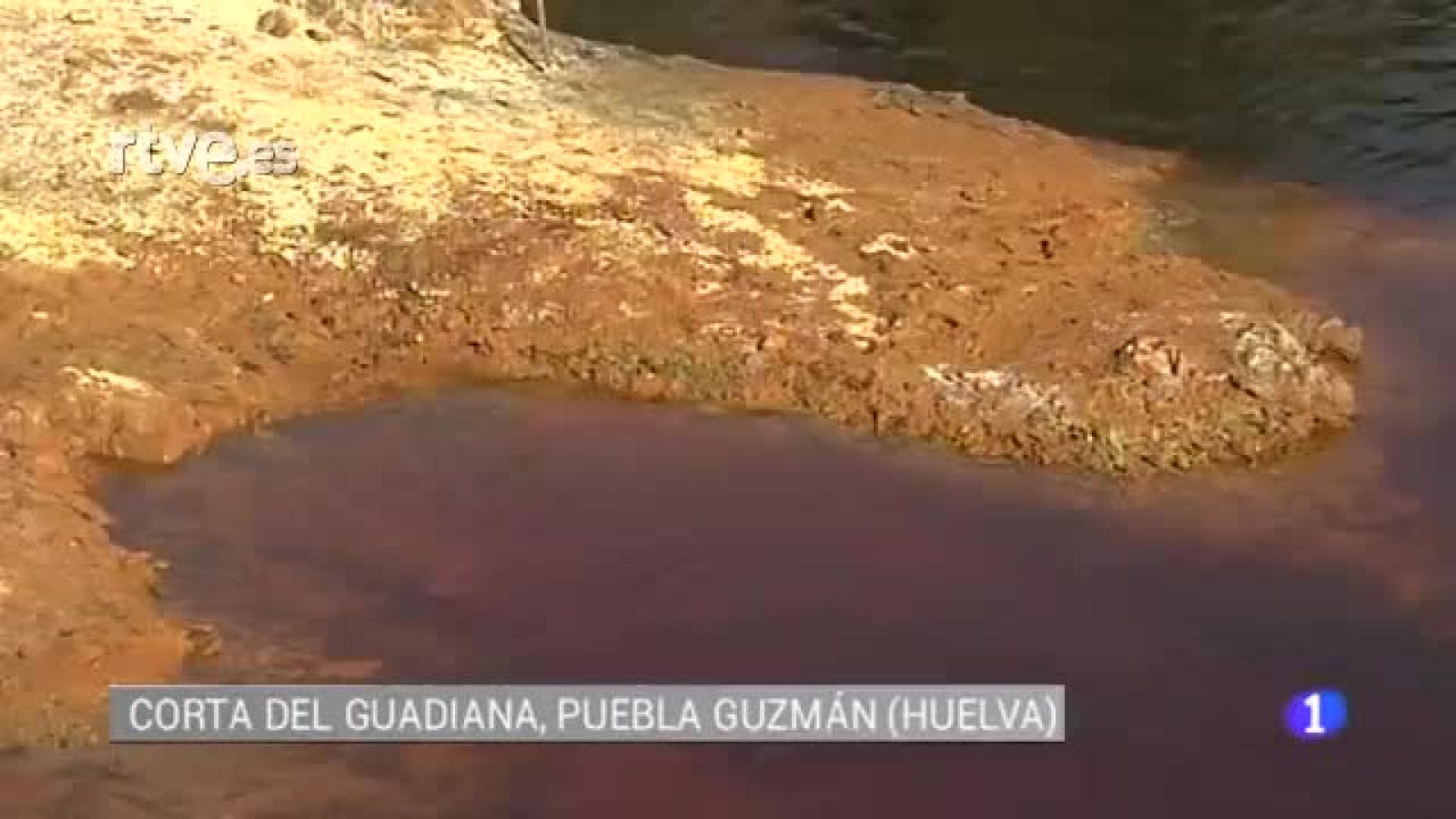
The so-called "Killer lake of Puebla de Guzmán", formed in the abandoned mine in Guadiana, Huelva, will be history in four or five months. This is how long the Spanish Geological and Mining Institute believes it will take to degas CO2 from the lake.
 La dirección de esta página ha sido copiada en su portapapeles
The former Herrerías Mines hold 80,000 cubic meters of carbon dioxide in their depths, created by the contact between acidic water and the walls of the mine shaft. If an embankment were to collapse or if a small earthquake caused movement in the lake, the C02 would abruptly escape, causing a lethal cloud of gas in the area, as happened in Cameroon, causing the deaths of 1,700 people.
To solve the problem, technicians from the Spanish Geological and Mining Institute have installed a pipe in the centre of the lake that allows 50 litres of gas per minute to escape, enough to degas the lake in a few months. The mine shaft was flooded naturally in the late 1980s when mining activity was ceased. C02 began to generate at that time and will continue to do so in the future.


