Inauguración del supertelescopio ALMA
El mayor observatorio astronómico terrestre empieza a andar
 10 Fotos
5 / 10
10 Fotos
5 / 10
-
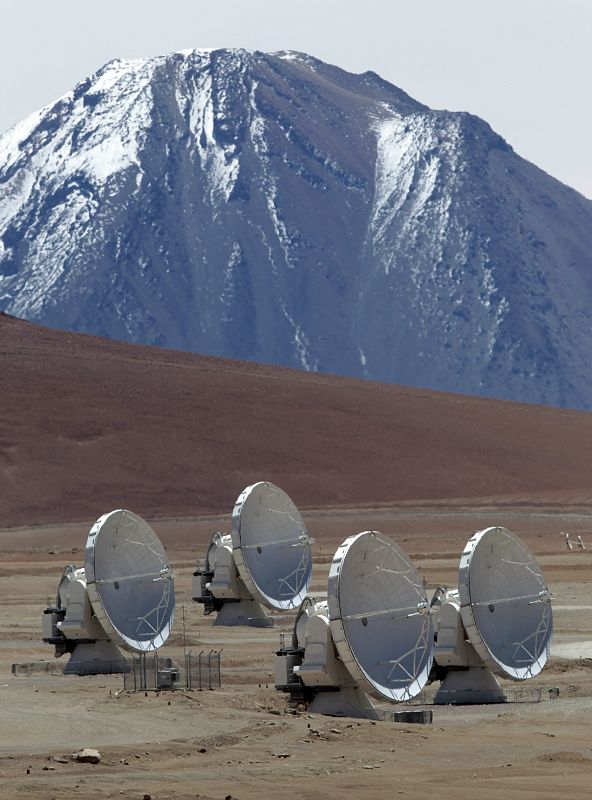
Vista de un grupo de antenas radiotelescópicas instaladas en el altiplano Llano de Chajnantor
13.03.2013CH22. SAN PEDRO DE ATACAMA (CHILE), 12/03/2013. Vista de un grupo de antenas radiotelescópicas instaladas en el altiplano Llano de Chajnantor y que forman parte del Atacama Large Milimeter Array (ALMA), en la Cordillera de los Andes, a unos 70 kilómetros de San Pedro de Atacama (Chile) hoy, martes 12 de marzo de 2013. El observatorio ALMA, el mayor complejo astronómico terrestre, asentado en el norte de Chile, abrirá una nueva ventana al cosmos que puede descubrir secretos que tan siquiera imaginamos. EFE/Felipe TruebaEFE/Felipe Trueba -
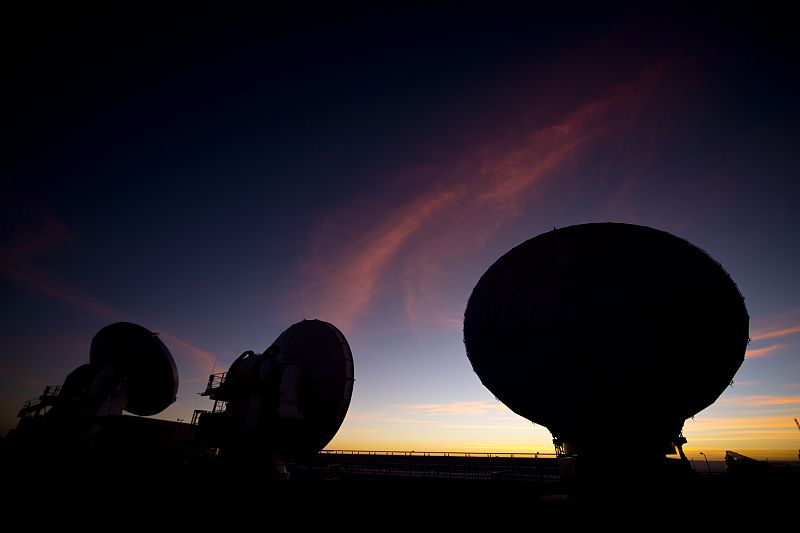
Otra vista de las antenas de ALMA, en Chile.
13.03.2013Radio telescope antennas of the ALMA ( Atacama Large Millimeter/submillimeter Array) project are seen in the Chajnantor plateau, Atacama desert, some 1500 km north of Santiago, on March 12,2013. The ALMA, an international partnership project between Europe, North America and East Asia, with the cooperation of Chile, is presently the largest astronomical project in the world. On March 13, 66 high precision antennas will be opened, located at an altitude of 5000 meters above sea level in the extremely arid Atacama desert.AFP PHOTO/Martin BERNETTI -
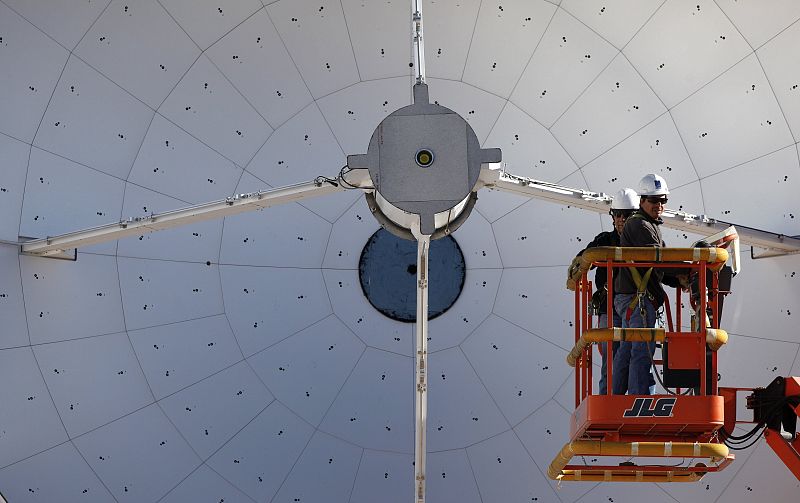
Trabajadores preparando una antena parabólica de ALMA.
13.03.2013Workers prepare a parabolic antenna of the ALMA (Atacama Large Millimetre/Submillimetre Array) project at the El Llano de Chajnantor in the Atacama desert, some 1730 km (1074 miles) north of Santiago and 5000 metres above sea level, March 12, 2013. ALMA will be inaugurated on Wednesday and is being constructed by the ESO (European Organisation for Astronomical Research in the Southern Hemisphere) with its partners NAOJ (National Astronomical Observatory of Japan) and NRAO (National Radio Astronomy Observatory). ALMA will have 66 high precision antennas which will work together as a single giant telescope to study the universe, molecular gas, dust of stars, galaxies and planetary systems, ESO said. (CHILE - Tags: SCIENCE TECHNOLOGY ENVIRONMENT)REUTERS/Ivan Alvarado
Últimas fotogalerías Noticias





Ver más


