El montaje del LHC
El montaje del LHC
 6 Fotos
4 / 6
6 Fotos
4 / 6
-
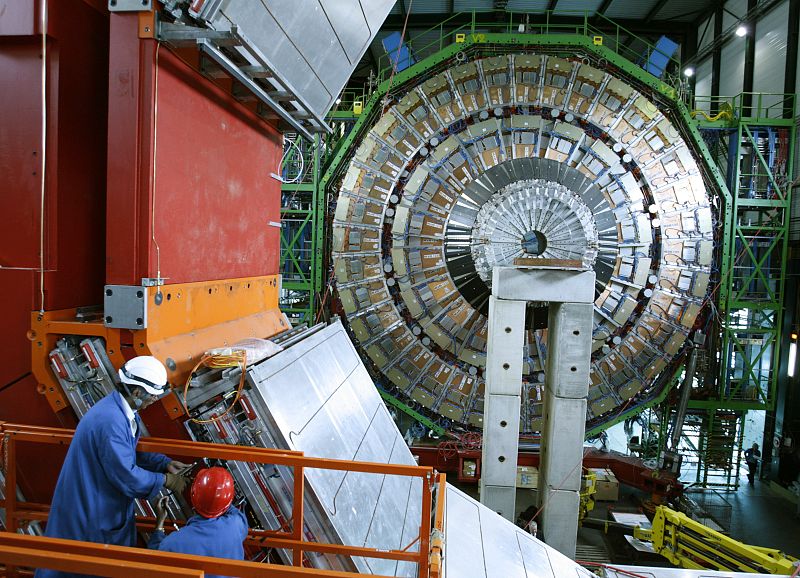
Dos técnicos ensamblan el CMS
10.09.2008Two technicians assemble an element of the CMS (Compact Muon Solenoid) experiment at the European Organization for Nuclear Research CERN (Centre Europeen de Recherche Nucleaire) in the French village of Cessy, near Geneva March 22, 2007. CMS is part of five experiments which, from the end of 2007 on, will study what happens when beams of particles collide in the 27 km (16.8 miles) long underground ring LHC (Large Hadron Collider). REUTERS/Denis Balibouse (SWITZERLAND)REUTERS/Denis Balibouse -
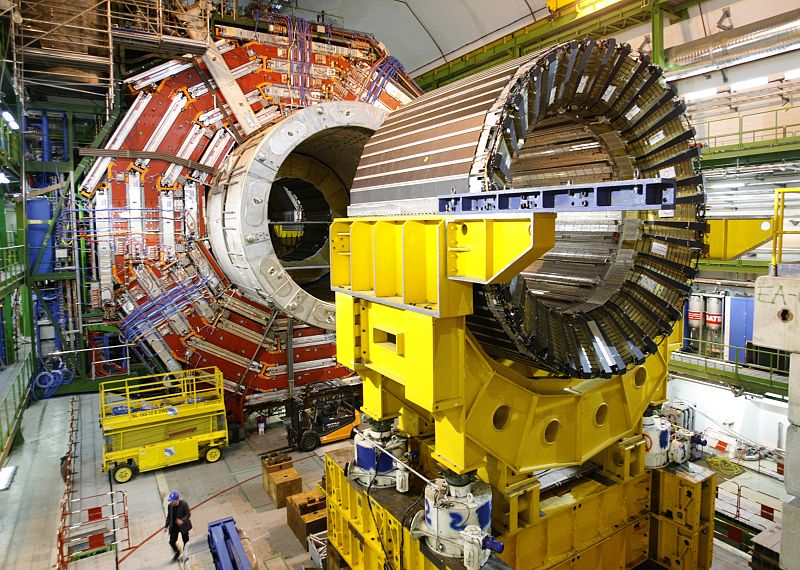
El imán central del CMS
10.09.2008A technician walks under the core magnet of the CMS (Compact Muon Solenoid) experiment at the European Organization for Nuclear Research CERN (Centre Europeen de Recherche Nucleaire) in the French village of Cessy, near Geneva March 22, 2007. CMS is part of five experiments which, from the end of 2007 on, will study what happens when beams of particles collide in the 27 km (16.8 miles) long underground ring LHC (Large Hadron Collider). REUTERS/Denis Balibouse (SWITZERLAND)REUTERS/Denis Balibouse -
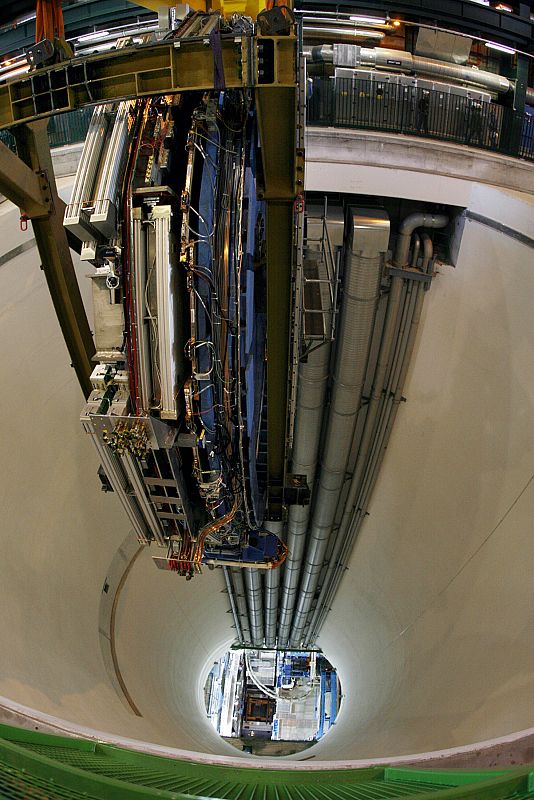
El último elemento del ATLAS
10.09.2008The last element, weighing 100 tonnes, of the ATLAS (A Toroidal LHC ApparatuS) experiment is lowered into the cave at the European Organization for Nuclear Research CERN (Centre Europeen de Recherche Nucleaire) in Meyrin, near Geneva February 29, 2008. ATLAS is part of five experiments which, from mid 2008 on, will study what happens when beams of particles collide in the 27 km (16.8 miles) long underground ring LHC (Large Hadron Collider). ATLAS is one of the largest collaborative efforts ever attempted in the physical sciences. There are 2100 physicists (including 450 students) participating from more than 167 universities and laboratories in 37 countries. REUTERS/Denis Balibouse (SWITZERLAND)REUTERS/Denis Balibouse
Últimas fotogalerías Noticias




Ver más


