Celebraciones del Día de Todos los Santos
El mundo entero lleva flores a sus muertos
 18 Fotos
3 / 18
18 Fotos
3 / 18
-
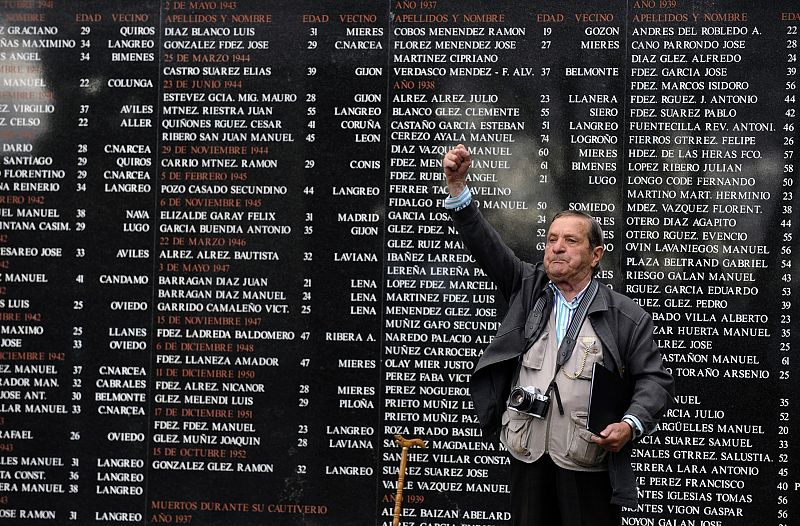
Día de Todos los Santos
02.11.2009Jose Gracia Cavite, whose father passed away during the Spanish civil war, gestures as he visits a memorial for Republicans killed during and after the Spanish civil war at Oviedo's San Salvador cemetery on All Saints' Day November 1, 2009. Catholics in Spain mark November 1 by visiting the gravesites of deceased relatives and friends. REUTERS/Eloy Alonso (SPAIN SOCIETY RELIGION)REUTERS/Eloy Alonso -
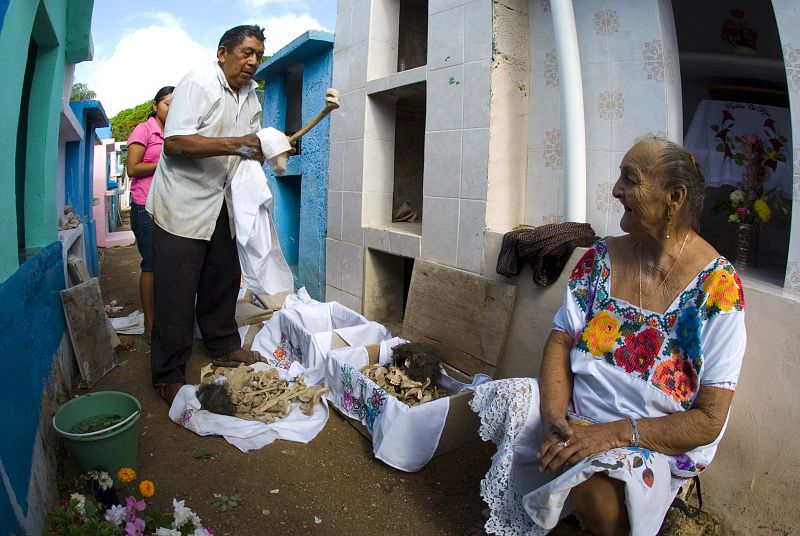
Habitantes de la localidad de Pomuch, visitan un cementerio en Yucatán, México
02.11.2009MEX03. POMUCH (MÉXICO), 01/11/09.- Habitantes de la localidad de Pomuch, que en maya significa "Ahí donde se tuestan los sapos", visitan un cementerio hoy, 1 de noviembre de 2009, en este lugar ubicado en Yucatán (México). Los muertos de la comunidad maya de Pomuch regresan cada año al mundo de los vivos gracias a una tradición extraña y de origen confuso por la que sus seres queridos los desentierran, limpian y miman con distintas ofrendas para mostrarles su amor y veneración. EFE/Jaime AvalosEFE/Jaime Avalos -
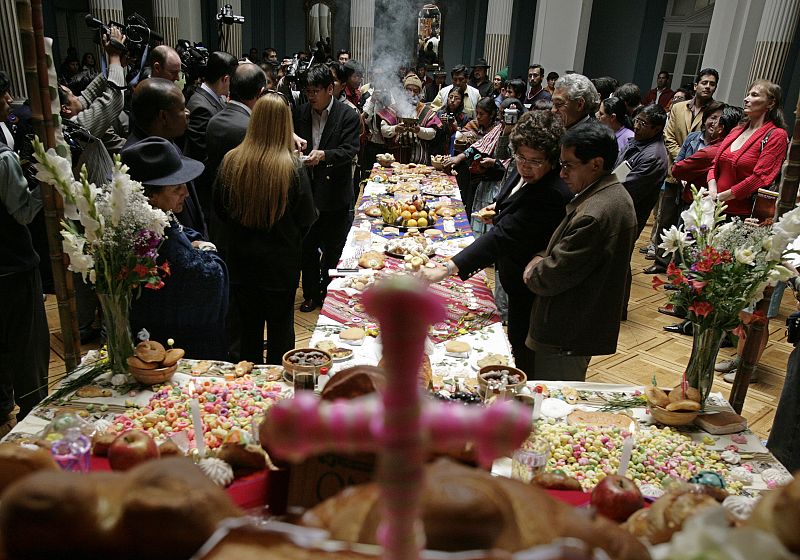
Ceremonia por el Día de Todos los Santos en La Paz, Bogotá
02.11.2009People participate in a traditional All Saints Day ceremony at the Foreign Ministry building in La Paz October 30, 2009. Traditionally, indigenous Bolivians celebrate All Saints Day by paying homage to their dead ones with a feast of home-baked, doll-shaped breads, fresh fruit and coca leaves and flowers. The syncretism practiced by the Aymaras, a blend of Catholicism and indigenous beliefs, calls for the offerings to be neatly placed on top of graves, and then given away to beggars, who in exchange say prayers for the souls of the dead ones. REUTERS/David Mercado (BOLIVIA RELIGION SOCIETY)REUTERS/David Mercado

Últimas fotogalerías Noticias
Ver más


